

Are synthetic polyester fibres resistant to chemicals?
Jul 01, 2026
As a supplier of Fibres Synthetic Polyester, I've often been asked about the chemical resistance of these materials. In this blog, I'll delve into the science behind the chemical resistance of synthetic polyester fibres, exploring their performance in various chemical environments and the factors that influence their durability.
Understanding Synthetic Polyester Fibres
Synthetic polyester fibres are widely used in a variety of industries due to their excellent properties such as high strength, good elasticity, and resistance to abrasion. They are made from polymers that are synthesized through a chemical process, typically involving the reaction of dicarboxylic acids with diols. The most common type of polyester is polyethylene terephthalate (PET), which is used to make a wide range of products including clothing, carpets, and non - woven fabrics.
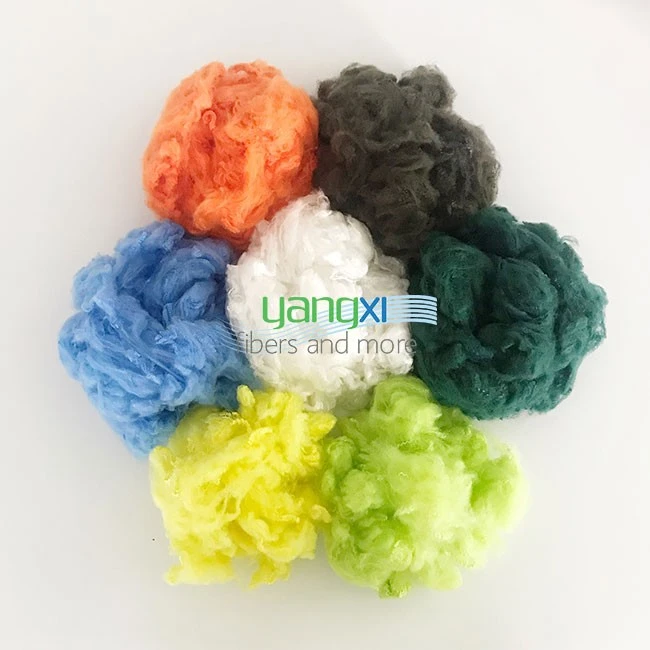
Fibres Synthetic Polyester are known for their versatility and can be engineered to meet specific requirements. For example, 3D Recycled Polyester Staple Fiber offers unique structural and performance characteristics, while Polyester Staple Fibre From Pet Bottles provides an eco - friendly alternative.
Chemical Resistance of Synthetic Polyester Fibres
One of the key advantages of synthetic polyester fibres is their relatively high resistance to many chemicals. This resistance is due to the chemical structure of the polyester polymer. The ester linkages in the polymer chain are relatively stable and do not react easily with many common chemicals.
Resistance to Acids
Polyester fibres generally have good resistance to weak acids. For example, they can withstand exposure to dilute acetic acid, which is commonly found in household vinegar. However, concentrated acids can cause damage to polyester fibres. Strong acids such as sulfuric acid or hydrochloric acid can hydrolyze the ester linkages in the polyester polymer, leading to a loss of strength and integrity of the fibres.
Resistance to Bases
Polyester fibres also show some resistance to weak bases. They can tolerate mild alkaline solutions for a certain period of time. But strong bases, like sodium hydroxide, can attack the ester bonds in the polyester. Hydrolysis occurs under basic conditions, breaking down the polymer chains and degrading the fibres. The rate of degradation depends on the concentration of the base, the temperature, and the duration of exposure.
Resistance to Organic Solvents
Synthetic polyester fibres are relatively resistant to many organic solvents. They are insoluble in most common solvents such as ethanol, acetone, and toluene. However, some solvents with high polarity or strong swelling ability can have an effect on polyester fibres. For example, chlorinated solvents like trichloroethylene can cause swelling of the fibres, which may lead to a change in their physical properties and a reduction in strength.

Factors Affecting Chemical Resistance
Several factors can influence the chemical resistance of synthetic polyester fibres:
Polymer Structure
The structure of the polyester polymer plays a crucial role in its chemical resistance. Polyesters with a more regular and tightly packed molecular structure are generally more resistant to chemical attack. For example, high - crystallinity polyester fibres have better chemical resistance than low - crystallinity ones because the crystalline regions are more difficult for chemicals to penetrate.
Additives
The addition of certain additives can enhance the chemical resistance of polyester fibres. For instance, stabilizers can be added to prevent degradation caused by UV light and some chemicals. Flame retardants can also be incorporated, which may have an impact on the chemical resistance of the fibres depending on their chemical nature.
Processing Conditions
The way the polyester fibres are processed can affect their chemical resistance. Fibres that are heat - set at higher temperatures may have better dimensional stability and chemical resistance. The orientation of the polymer chains during spinning also plays a role. Highly oriented fibres are often more resistant to chemical attack because the chains are more tightly packed and less accessible to chemicals.
Applications Based on Chemical Resistance
The chemical resistance of synthetic polyester fibres makes them suitable for a variety of applications:
Industrial Applications
In industrial settings, polyester fibres are used in filtration systems because of their resistance to many chemicals. They can be used to filter corrosive liquids and gases without being damaged easily. For example, in chemical processing plants, polyester filters can be used to separate solid particles from acidic or alkaline solutions.
Textile Applications
In the textile industry, polyester fibres are used in workwear for workers in chemical - related industries. The chemical resistance of polyester helps protect the workers from accidental exposure to chemicals. Polyester is also used in outdoor clothing because it can withstand exposure to environmental chemicals such as acid rain.
Testing Chemical Resistance
To ensure the quality and chemical resistance of our Fibres Synthetic Polyester, we conduct a series of tests. These tests typically involve exposing the fibres to different chemicals under controlled conditions and measuring the changes in their physical and mechanical properties.
We use methods such as tensile strength testing before and after chemical exposure to determine the degree of degradation. We also analyze the changes in the fibre's appearance, such as discoloration or swelling. By conducting these tests, we can provide our customers with accurate information about the chemical resistance of our products and ensure that they meet the required standards.
Conclusion
In conclusion, synthetic polyester fibres have a certain degree of resistance to many chemicals, but their performance can vary depending on the type of chemical, the concentration, the temperature, and other factors. Understanding the chemical resistance of polyester fibres is crucial for selecting the right material for specific applications.
As a supplier of Fibres Synthetic Polyester, we are committed to providing high - quality products that meet the diverse needs of our customers. Whether you need 3D Recycled Polyester Staple Fiber for a special application or Polyester Staple Fibre From Pet Bottles for an eco - friendly project, we can offer the right solution.
If you are interested in our products and would like to discuss your requirements further, we invite you to contact us for a procurement and negotiation. We look forward to working with you to find the best synthetic polyester fibre solution for your needs.
References
- Billmeyer, F. W. (1984). Textbook of Polymer Science. Wiley - Interscience.
- Lewin, M., & Pearce, E. M. (Eds.). (1998). Handbook of Fiber Chemistry. Marcel Dekker.
- Tortora, P. G., & Merkel, R. S. (2009). Fairchild's Dictionary of Textiles. Fairchild Publications.