

Your Professional Specialty Polyester and Other Eco-friendly Fibers Supplier
Founded in 2010, Jiangyin Yangxi was established with this humble yet profound purpose.To realize our vision, we explore and promote commercially valuable green products and production technologies through consulting and import-export trade.Initially, we focused on producing polyester fiber from recycled plastic bottles. This versatile and high-capacity fiber addresses the plastic waste problem in a straightforward way. With the growing awareness of environmental issues among consumers in recent years, recycled polyester has become a well-known sustainable textile material.
-
![Virgin Polyester Tops]() Add to Inquiry
-
![Flame Retardant Polyester Staple Fiber]()
Flame Retardant Polyester Staple Fiber
Add to Inquiry -
![Low Melt Polyester Fiber]() Add to Inquiry
-
![Bosilun Fiber]() Add to Inquiry
-
![Bosilun Tops]() Add to Inquiry
-
![PLA Fiber]() Add to Inquiry


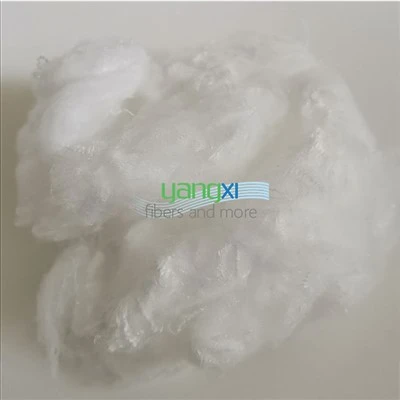

Specialty polyester and other eco-friendly fibers are high-performance, low-impact fiber solutions designed for applications that require both functional reliability and environmental responsibility. Compared with conventional fibers, these materials place greater emphasis on renewable or recycled raw materials, lower resource consumption during production, and improved end-of-life or recyclability potential. They are widely used across spinning, filling, nonwovens, home textiles, apparel accessories, hygiene products, packaging-related textiles, and industrial textile applications.
|
POLYESTER TOPS, VIRGIN, 2.5D×88MM,SD, RAW WHITE |
|||
|
Test item |
Unit |
Target |
Tolerance (plus-minus) |
|
Sliver weight |
g/m |
20.5 |
1.0 |
|
Sliver weight unevenness |
% |
1.0 |
1.0 |
|
Average length |
mm |
88.0 |
5.0 |
|
Percentage of long fiber |
% |
1.0 |
1.0 |
|
Percentage of short fiber |
% |
1.0 |
1.0 |
|
Nep |
Piece/g |
2.0 |
3.0 |
|
Flake |
Piece/m |
1.0 |
4.0 |
Properties of PLA Fiber
PLA fiber are 100% bio-based synthetic thermoplastic fibers, which are favored because of their wide source of biomass raw materials, green production process, degradability, and excellent comprehensive performance.
PLA fibers are considered the most promising sustainable and biodegradable fibers to replace conventional polyethylene terephthalate (PET) polyester fibers in textile products.
PLA fibers have good biodegradability and can be completely decomposed into CO2 and H2O in nature after being discarded. Through photosynthesis, the two can be turned into starch, the raw material of lactic acid.
PLA fibers have the physical and mechanical properties of high crystallinity, high orientation, high heat resistance and high strength. The physical properties of PLA fibers are similar to those of PET fibers and nylon fibers. The performance comparison of the three is shown in the table below.
Type of PLA Fiber
Polylactic acid filaments
Fiber aggregates formed by stretching, twisting or deformation of multiple long monofilaments, with a single filament containing dozens of monofilaments.
Polylactic acid staple fibers
Short-cut fibers with certain strength and elasticity, usually several centimeters to tens of centimeters in length.
It can be processed on cotton spinning, wool spinning systems or new spinning equipment, supporting pure spinning or blending (such as blending with cotton, linen, lyocell and other fibers).
Polylactic acid composite fibers
Functional fibers made by copolymerization or compounding with other polymer materials. For example, copolymerization of lactic acid (LA) and glycolic acid (GA) is used for absorbable surgical sutures, or compounding with carbon fibers to enhance thermal conductivity.
Material & Process
Specialty polyester and other eco-friendly fibers are built on traceable raw material systems, controlled manufacturing processes, and multi-level quality assurance. By combining virgin PET, recycled PET, and other sustainable material sources with modern spinning and testing methods, these fibers can meet both performance requirements and environmental expectations across spinning, filling, nonwovens, home textiles, and industrial textile applications.
Raw Material Sources
- Virgin PET: Produced from purified PTA/MEG or PET chips, offering stable molecular structure, consistent spinnability, and reliable strength for high-performance yarns and functional fibers.
- Recycled PET: Sourced from post-industrial PET waste, clean production scraps, post-consumer PET bottles, or eligible textile waste. After sorting, cleaning, melting, and purification, recycled PET can be transformed into fiber-grade material with stable performance.
- Other Eco-friendly Materials: May include bio-based polymers, regenerated cellulose materials, and blended sustainable fibers, depending on product design and application needs.
- Responsible Sourcing Control: Raw materials are selected through supplier qualification, batch traceability, and contamination control to ensure consistency, safety, and compliance with downstream brand requirements.
Production Line Features
- Controlled Melting and Spinning: PET chips or recycled flakes are dried, melted, and extruded through spinnerets to form continuous filaments or staple fibers with controlled fineness and uniformity.
- Physical and Chemical Recycling Options: Physical recycling is suitable for clean PET streams and offers efficient material recovery, while chemical or advanced recycling methods can further purify degraded or mixed polyester waste to restore fiber-grade quality.
- Process Stability Management: Key parameters such as temperature, viscosity, draw ratio, cooling, and crimping are monitored to maintain consistent fiber strength, elongation, softness, and bulk.
- Functional Modification Capability: Fibers can be adjusted for hollow structure, low melting point, antibacterial treatment, flame retardancy, dope dyeing, or improved moisture management, depending on end-use requirements.
- Lower-Impact Manufacturing: Production lines aim to reduce energy consumption, optimize water use, control emissions, and improve material utilization efficiency across the fiber-making process.
Advantages of PLA Fiber
Natural, skin-friendly, antibacterial, and hypoallergenic
Polylactic acid (PLA) is a bio-based material derived from renewable plant resources. It is naturally safe and reduces chemical irritation to the skin.
Breathability and moisture absorption
PLA fibers are lightweight and quickly return to a dry state after becoming wet, reducing the opportunity for bacterial growth. Additionally, PLA fibers have excellent breathability, offering a comfortable experience for users.
Soft touch and comfort
PLA fibers have a soft texture, gently caring for the skin during use. This makes them particularly suitable for baby and feminine sanitary products.
High strength and durability
Nonwoven fabrics made from PLA fibers boast excellent physical properties, such as high strength and resistance to friction and rubbing. This ensures functionality when used in products like makeup remover wipes, facial towels, and wet wipes.
Biodegradable and eco-friendly
In the context of low carbon and sustainable development, one of the major advantages of PLA fibers is their biodegradability. Products made from PLA fiber nonwoven fabrics decompose easily in natural environments, and the resulting carbon dioxide and water do not pollute the environment. These byproducts can re-enter the ecological cycle through the photosynthesis of green plants.
Applications of PLA Fiber
In recent years, there has been a growing demand for sustainable and eco-friendly materials across various industries. One such material that has gained considerable attention is Polylactic Acid (PLA) fiber. Derived from renewable resources such as corn, cassava, and sugarcane, PLA fiber offers numerous applications that are both versatile and environmentally friendly. In this blog post, we will explore the diverse uses of PLA fiber.
Textiles and Apparel
PLA fiber can be used for the production of textiles and apparel. Whether used alone or blended with other fibers, PLA imparts unique properties to fabrics, such as breathability, moisture-wicking, and softness. PLA-based textiles are increasingly being used in clothing, sportswear, lingerie, and home textiles. The eco-friendly nature of PLA fiber aligns with the growing demand for sustainable fashion.
Nonwoven Products
PLA fiber finds extensive applications in the production of nonwoven products. Nonwoven fabrics made from PLA are used in various sectors, including hygiene products, wipes, filters, and medical textiles. The biodegradability and antimicrobial properties of PLA make it suitable for single-use items, reducing the environmental impact associated with conventional nonwoven materials.
Packaging
PLA fiber is widely utilized in packaging applications. It is used to produce biodegradable and compostable packaging materials such as films, trays, bottles, and containers. PLA-based packaging offers a sustainable alternative to traditional petroleum-based plastics, reducing carbon emissions and minimizing waste in landfills.
Agriculture and Horticulture
PLA fiber has found applications in agriculture and horticulture sectors. It is used in the production of biodegradable mulch films, which help in weed control, moisture retention, and soil temperature regulation. PLA-based mulch films eliminate the need for plastic films and reduce environmental pollution caused by traditional mulching materials.
3D Printing
PLA fiber is a popular choice for 3D printing due to its ease of use and biodegradability. It is widely used as a filament material for creating various objects and prototypes. PLA-based 3D printing offers a sustainable and environmentally friendly alternative to traditional manufacturing processes.
Automotive and Industrial Applications
PLA fiber is also finding its way into automotive and industrial applications. It is used in the production of interior components, upholstery, and insulation materials. PLA-based products offer lightweight and eco-friendly alternatives to conventional materials, contributing to energy efficiency and reducing carbon footprint.
PLA Fiber Manufacturing
The basic steps to create polylactic acid from corn are as follows:
1. First corn starch must be converted into sugar through a mechanical process called wet milling. Wet milling separates the starch from the kernels. Acid or enzymes are added once these components are separated. Then, they’re heated to convert the starch into dextrose (aka sugar).
2. Next, the dextrose is fermented. One of the most common fermentation methods involves adding Lactobacillus bacteria to the dextrose. This, in turn, creates lactic acid.
3. The lactic acid is then converted into lactide, a ring-form dimer of lactic acid. These lactide molecules bond together to create polymers.
4. The result of the polymerization is small pieces of raw material polylactic acid plastic which can be converted into an array of PLA plastic products.
Production process of PLA Fiber
PLA fiber starts with an abundant, natural resource – plants (usually corn and potatoes). Starch in plants ferments to produce lactic acid. From lactic acid a molecule called lactide is created. Water is then removed and it gets crystallized to create the high-performance polymer – polylactide (PLA). Also known as polylactide, PLA is a non-aromatic polyester derived 100% from renewable resources.

Our Certifications


Inquiry & Sample Request
Ready to develop specialty polyester or other eco-friendly fiber solutions for your next project? Whether you are sourcing fibers for spinning, filling, nonwovens, home textiles, apparel accessories, packaging-related textiles, or industrial applications, our team can help you match the right material, specification, and sustainability profile.
Send Your Specification Requirements
To help us provide an accurate quotation and technical recommendation, please share the following details:
- Fiber type: specialty polyester, recycled polyester, bio-based fiber, blended eco-friendly fiber, or other sustainable fiber
- Application: spinning, filling, nonwovens, home textiles, hygiene products, packaging-related textiles, or industrial use
- Specification: denier, cut length, cross-section, hollow/solid, low-melt, dope-dyed, or functional finish
- Raw material preference: virgin PET, recycled PET, bio-based content, or blended composition
- Sustainability requirements: GRS support, recycled content verification, low-impact processing, or brand compliance needs
- Order quantity: trial order, regular production volume, or long-term supply plan
- Destination port and packaging requirements
Request Free Samples
We offer sample support so you can evaluate fiber hand feel, strength, bulk, spinnability, filling resilience, and nonwoven processing performance before placing a production order. Samples can be arranged according to your application scenario and testing requirements.
Contact Us
Submit your inquiry through our contact form, email our sales team, or reach out via our official communication channels. Please include your company name, product requirements, target application, and estimated quantity, and we will respond with product recommendations, specifications, and quotation details.
Let us help you build more sustainable, high-performance fiber solutions—from material selection and sampling to stable bulk supply.
FAQ
We're well-known as one of the leading specialty polyester and other eco-friendly fibers suppliers in China. Welcome to wholesale high quality specialty polyester and other eco-friendly fibers for sale here and get quotation from our factory. Good service and reasonable price are available.
Bosilun Fiber, specialty polyester and other eco-friendly fibers, Bosilun Tops