

Your Professional Recycled Polyester Staple Fiber Supplier
Founded in 2010, Jiangyin Yangxi was established with this humble yet profound purpose.To realize our vision, we explore and promote commercially valuable green products and production technologies through consulting and import-export trade.Initially, we focused on producing polyester fiber from recycled plastic bottles. This versatile and high-capacity fiber addresses the plastic waste problem in a straightforward way. With the growing awareness of environmental issues among consumers in recent years, recycled polyester has become a well-known sustainable textile material.
-
![Hollow Conjugated Fiber 15D HC White]()
Hollow Conjugated Fiber 15D HC White
Add to Inquiry -
![Polyester Staple Fibre in 15d]() Add to Inquiry
-
![Polyester Staple Fibre in 7d]() Add to Inquiry
-
![15D 64mm HCS]() Add to Inquiry
-
![Hollow Conjugated Polyester Fiber For Fillings]()
Hollow Conjugated Polyester Fiber For Fillings
Add to Inquiry -
![Recycled Solid Polyester Staple Fiber For Carpets]()
Recycled Solid Polyester Staple Fiber For Carpets
Add to Inquiry -
![Eco-friendly Polyester Fiber For Acoustic Insulation]()
Eco-friendly Polyester Fiber For Acoustic Insulation
Add to Inquiry -
![Regenerated Polyester Staple Fiber For Geotextiles]()
Regenerated Polyester Staple Fiber For Geotextiles
Add to Inquiry -
![Polyester Fiber For Automotive Non-wovens]()
Polyester Fiber For Automotive Non-wovens
Add to Inquiry -
![Recycled Polyester Staple Fiber For Yarn Spinning]()
Recycled Polyester Staple Fiber For Yarn Spinning
Add to Inquiry -
![Super White Regenerated Polyester Staple Fiber]()
Super White Regenerated Polyester Staple Fiber
Add to Inquiry -
![100% Recycled Black Polyester Staple Fiber]()
100% Recycled Black Polyester Staple Fiber
Add to Inquiry


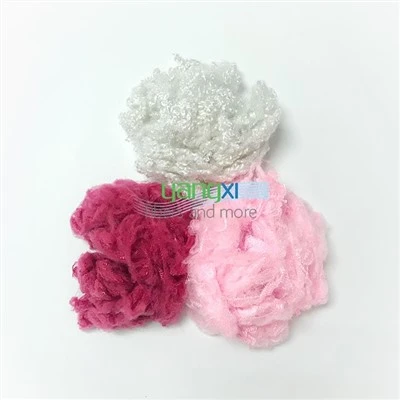


Recycled Polyester Staple Fiber (RPSF) is an eco-conscious synthetic fiber made from recycled PET bottles, discarded polyester textiles, and post-industrial polyester waste. Through recycling, melting, spinning, drawing, and cutting processes, these materials are transformed into staple fibers with different deniers, lengths, and colors to meet diverse manufacturing needs.
Featuring good durability, lightweight properties, resilience, and versatile processing performance, Recycled Polyester Staple Fiber is widely used in textile spinning, filling materials, and nonwoven manufacturing. It can be blended with other fibers to produce yarns and fabrics, used as filling for pillows, cushions, mattresses, and quilts, or processed into nonwoven products for automotive interiors, filtration, insulation, and industrial applications.
By reusing polyester resources, RPSF helps reduce reliance on virgin raw materials and supports more sustainable manufacturing across the textile and industrial sectors.
Product Range /Specification Table
Recycled Polyester Staple Fiber is available in various specifications to meet the needs of textile spinning, filling, and nonwoven manufacturing. Denier, cut length, luster, color, and fiber structure can be selected according to specific processing requirements and end-use applications.
|
Recycled Polyester Staple Fiber |
|
|
1.Denier |
0.8D-130D |
|
2.Fiber Length |
8mm-102mm |
|
3.Color |
White/Black/Dope Dyed Colored |
|
4.Payment Term |
T/T, L/C |
|
5.Loading |
10 MT/20GP, 25 MT/40GP |
|
6.Place of origin |
China, Vietnam |
|
7.Certificate |
GRS Certified |
|
8.Delivery Time |
1~3 weeks |
Material & Process
Raw Material Sources
Recycled Polyester Staple Fiber (RPSF) is primarily produced from recycled PET materials, including post-consumer PET bottles and post-industrial polyester waste. Compared with virgin polyester staple fiber made from newly produced PET resin, recycled polyester staple fiber helps reduce plastic waste and supports more sustainable textile production. Virgin PET may also be used in conventional polyester staple fiber production or blended with recycled materials to meet specific performance requirements.
Advanced Production Process
Our recycled polyester staple fiber production process typically includes raw material sorting, cleaning, crushing, melting, filtration, spinning, drawing, crimping, heat setting, and cutting. Advanced production lines are designed to maintain stable processing conditions, consistent fiber dimensions, and reliable product quality. Manufacturing parameters can be adjusted to produce different deniers, cut lengths, colors, and solid or hollow fiber types according to customer requirements.
Quality Inspection & Control
Quality control is conducted throughout the production process to ensure consistent fiber performance and batch-to-batch stability. Key inspection items include fiber fineness (denier), cut length, tensile strength, elongation, crimp characteristics, color consistency, moisture content, and appearance. Additional tests can be arranged according to the intended application and customer specifications, helping buyers select recycled polyester staple fiber suitable for spinning, nonwoven fabrics, filling materials, and other industrial applications.
Advantages of Recycled Polyester Staple Fiber
High Strength and Reliable Performance
Our Recycled Polyester Staple Fiber is designed to provide reliable tensile strength, good resilience, and stable processing performance for various textile and nonwoven applications. Fiber properties can be optimized according to the intended end use, helping manufacturers improve product durability and maintain consistent production efficiency.
Consistent Quality Across Batches
Strict quality control throughout the manufacturing process helps maintain consistent denier, cut length, color, crimp, and fiber performance across production batches. This batch-to-batch consistency supports smoother downstream processing, reduces material variation, and helps B2B buyers maintain stable product quality in large-volume manufacturing.
Eco-Friendly Materials and Certification Support
Produced using recycled PET materials, Recycled Polyester Staple Fiber helps reduce dependence on virgin raw materials and supports more sustainable manufacturing practices. Relevant environmental certifications and recycled-content documentation, such as GRS or OEKO-TEX certification where applicable, can help buyers meet sustainability requirements and strengthen their supply chain transparency. Certification availability depends on the manufacturer, product, and applicable scope.
Customized Specifications for Diverse Applications
We offer flexible customization options to meet different production requirements and market needs. Buyers can specify denier, cut length, color, luster, fiber type, and application requirements. Solid or hollow fibers, as well as different performance characteristics, can be developed according to project needs, helping customers source suitable recycled polyester staple fiber for spinning, nonwoven fabrics, filling materials, automotive interiors, and other industrial applications.
Types of regenerated polyester staple fibre

Polyester fibre artificial silk knitted material
This is a kind of recycled polyester staple fibre fabric with a natural silk appearance, which is woven from the polyester filament or staple fibre yarns with a round shape and a variety of cross-sections. There is no need for ironing, etc., which is very popular among consumers. There are many types in daily life, such as polyester silk, polyester crepe, polyester satin, etc. These recycled polyester staple fibre imitation silk fabrics have all the advantages of polyester fibres, like not being easy to wrinkle, do not need to be ironed, being easy to clean, being wear-resistant, etc. Still, its only drawback is poor moisture absorption.
Polyester wool-like textile material
This type of polyester filament uses polyester stretch yarn, polyester network yarn, or various cross-section polyester yarn of different shapes as raw materials, or uses medium and long recycled polyester staple fibers and medium and long viscose, or medium and long acrylic. The woollen-style textile materials are called worsted wool-like and medium-length wool-like fabrics, woven into yarns by blending them into strings. The price is much lower than that of the same type of wool fabric. This kind of recycled polyester staple fibre fabric has the feel of woollen cloth, is fluffy and soft, has good elasticity, is very strong and durable, has good abrasion resistance, and is easy to clean.

Application of Recycled Polyester Staple Fiber
Recycled Polyester Staple Fiber (RPSF) is widely used in textiles, filling materials, nonwoven fabrics, automotive interiors, and home furnishings. Made from recycled polyester materials, it offers versatile processing options, consistent performance, and a practical solution for manufacturers seeking to incorporate recycled materials into their products.
Our recycled polyester staple fibers are available in different deniers, cut lengths, colors, and solid or hollow structures to meet diverse production requirements.
1. Textile Industry
Image suggestion: Recycled polyester staple fibers being processed into yarn, textile fabrics, or clothing materials.
Recycled polyester staple fiber is suitable for spinning and blending with other fibers to produce yarns and fabrics for apparel, workwear, home textiles, and other textile products. Its specifications can be selected according to spinning systems, fabric properties, and end-product requirements.
Typical applications:
- Blended yarns and textile fabrics
- Apparel and workwear materials
- Home textiles and decorative fabrics
- Recycled-content textile products
2. Filling Materials
Image suggestion: Polyester fiber filling used in pillows, cushions, quilts, and stuffed products.
Hollow and solid recycled polyester staple fibers can be used in filling applications. Depending on fiber structure and specifications, they can provide suitable bulk, resilience, softness, and shape retention for different products.
Typical applications:
- Pillows and cushions
- Quilts and comforters
- Stuffed toys
- Furniture padding and upholstery filling
3. Nonwoven Fabrics
Image suggestion: Recycled polyester staple fibers feeding into a nonwoven production line.
Recycled polyester staple fiber is a versatile raw material for nonwoven manufacturing. Fiber length, fineness, and bonding compatibility can be selected to suit different production processes, helping manufacturers achieve the required fabric structure, thickness, and functional performance.
Typical applications:
- Needle-punched nonwoven fabrics
- Thermal-bonded nonwovens
- Geotextiles and construction materials
- Industrial felts and filtration-related materials
4. Automotive Industry
Image suggestion: Automotive interior components, including trunk liners, floor carpets, and sound-absorbing felt.
Recycled polyester staple fiber can be incorporated into automotive interior and acoustic materials. Depending on the fiber specifications and the finished product design, it can contribute to cushioning, thermal insulation, and sound absorption.
Typical applications:
- Automotive carpets and trunk liners
- Interior padding and felt
- Sound-absorbing and insulation materials
- Selected automotive nonwoven components
Manufacturing Process of Recycled Polyester Staple Fibre (RPSF)
The Manufacturing Process of Recycled Polyester Staple Fibre (RPSF) begins with collecting post-consumer PET bottles, which are then sorted and cleaned to remove contaminants. The bottles are then cut into flakes and rewashed in hot water before being dried and heated to separate color pigments.
The PET flakes are then melted down and passed through a spinneret to produce filaments that are cooled rapidly in a liquid bath. These filaments can be cut to the desired length or combined with other fibres to form yarns. Finally, these yarns are spun together into RPSF fabric.
Once the PET bottles have been cleansed, manufacturing of Recycled Polyester Staple Fibre (RPSF) can begin. RPSF is made when the hot-washed and dried flakes are melted under high temperatures before being spun into yarn. This yarn creates fabrics such as blankets and pillows, providing a sustainable option that reduces landfill waste.
The product must meet stringent requirements of quality control tests which measure color, composition, and length of the fibre, amongst other criteria. If all conditions are met, the recycled polyester staple fibre can be certified for use in various products.
For a precise process, PET bottles are crushed to make 12 to 15 mm flakes and are hot washed in a chemical solution encompassing a 2 percent solution of Sodium Hydroxide. Also, PET flakes’ contamination should not be more than 200 ppm.
Manufacturing RPSF requires the use of vacuum driers to reduce the inherent moisture in PET flakes. The driers help to eliminate surface moisture and reduce the internal moisture content.
By controlling and managing the moisture levels, RPSF can attain a soft/crystallized texture with optimal drying characteristics when spun into yarns or filaments.
Careful management of this process ensures that RPSF maintains consistent quality across every batch. As a result, RPSF provides superior performance characteristics compared to virgin polyester fibres.
Spinneret is accessible to make hollow or solid PSF of variable denier (1.5Den 50Den). Filaments coming out of spinning are gathered in bobbins or cans. These dried flakes are transferred to Extruder for spinning. This completes the process of spinning.
After the Hollow and Solid PSF are treated to create different types of fibres, they are ready for manufacturing RPSF. The process begins with several cans or bobbins combined in a Creel area.
The mixture of several cans is then stretched multiple times in a chemical hot bath, which produces the RPSF. Finally, this Recycled Polyester Staple Fibre (RPSF) is now complete and ready for use.

Our spun polyester dyed yarn, custom pillow filling material, custom raw white polyester staple fiber is comparable to the advanced level of similar products at home and abroad, and they are widely favored by international and domestic industry chain giants.Each of our 1 4D Recycled Polyester Staple Fiber is carefully designed to be not only aesthetically pleasing but also durable and cost effective. The development of our company has expanded the scale horizontally and extended the industrial chain vertically, maintaining a good trend of continuous rapid and healthy development. If you wish to get more details about our company, You should contact with us now! Our company sincerely looks forward to working with you! We will consistently promote the company's management and corporate governance structure, so that the company and employees grow together, and the company and society develop and advance together. Our company adheres to the corporate belief of national brand created by nations. It has attracted a group of high-tech talents, insisted on independent innovation, and carried a dream to build a Chinese brand with international competitiveness.
Our Certifications


Looking for a Reliable Recycled Polyester Staple Fiber Supplier?
Find the right Recycled Polyester Staple Fiber for your production needs. Whether you manufacture textiles, filling materials, nonwoven fabrics, automotive interiors, or home furnishings, we can help you identify suitable fiber specifications for your application.
Share your requirements with our team, and let us help you find a practical solution for your production process and purchasing goals.
Tell Us Your Requirements
To help us provide an accurate quotation, please share the following information:
- Denier: Your required fiber fineness
- Cut Length: The desired fiber length
- Fiber Type: Solid or hollow
- Color & Luster: White, black, colored, or other requirements
- Application: Textile, filling, nonwoven, automotive, or other uses
- Order Quantity: Estimated purchasing volume
- Packaging & Delivery: Your preferred packaging and destination
Request Samples for Quality Evaluation
Need to evaluate the fiber before placing a bulk order? Contact us to request samples for testing. You can assess the fiber's appearance, processing suitability, and performance against your application requirements before confirming your purchase.
Sample availability, specifications, and shipping arrangements can be discussed with our sales team.
FAQ for Polyester Staple Fibers
This FAQ is designed to address your key questions about shipping, payment, product origin, documentation, and quality—making your purchasing process smoother.
Shipping & Logistics
Q1: How do you ship Polyester Staple Fibers?
We ship Polyester Staple Fibers by container loads directly from the factory to customers worldwide, ensuring efficiency and cost-effectiveness for bulk orders.
Q2: What are the FOB shipping terms you offer?
Under FOB (Free On Board) terms:
We arrange bookings through your designated shipping agent.
We deliver the containers aboard the ship at the local port (China or Vietnam, based on your order).
Q3: What are the CIF shipping terms you offer?
Under CIF (Cost, Insurance, and Freight) terms:
We handle the entire shipping arrangement (including booking the ship).
We deliver the containers to your destination port—this excludes duties and customs formalities (which are the customer’s responsibility).
Q4: Can you arrange air shipments for Polyester Staple Fibers?
Yes, we can arrange air shipments at the customer’s expense if urgent delivery is required.
Payment Terms
Q1: What deposit is required to confirm a purchase order?
Customers are required to make a 20% deposit at the time of placing the purchase order.
Q2: How long does it take for the Polyester Staple Fibers to be ready for loading?
It typically takes 1 to 3 weeks for the fibers to be produced and ready for loading.
Q3: When is the balance payment due?
After we load the goods and provide you with proof of shipping documents (e.g., Bill of Lading), we will issue an invoice for the balance payment of the cargo.
Q4: What payment methods do you accept?
We offer flexible payment options:
- Wired transfers (T/T)
- Letters of credit at sight
- Letters of credit with agreed terms
Please contact us directly for detailed banking information.
Origin & Documentation
Q1: From which countries do you mainly export Polyester Staple Fibers?
Our Polyester Staple Fibers are mainly exported from China and Vietnam—these two countries are our main export bases for global shipments.
Q2: Do you provide a Certificate of Origin for shipments from Vietnam?
Yes. All fibers shipped from Vietnam come with a government-issued Certificate of Origin—a formal document verifying the product’s origin.
Q3: Why is the Certificate of Origin from Vietnam valuable?
Vietnam has the second-most free trade agreements (FTAs) globally. The Certificate of Origin allows you to leverage these FTAs to potentially reduce or eliminate import duties in your country.
Q4: What documents will I receive with my shipment?
You will receive a complete set of shipping and commercial documents, including:
- Proforma Invoice
- Packing List
- Commercial Invoice
- Bill of Lading
- Certificate of Origin (for Vietnam shipments)
Product Quality
Q1: Why do Recycled Polyester Staple Fibers vary in quality?
Recycled Polyester Staple Fibers can vary significantly between manufacturers (due to differences in raw materials, equipment, and processes) and may even have slight variations between batches—this is common in the recycled fiber industry.
Q2: How do you help customers find suitable Recycled Polyester Staple Fibers?
We partner with trusted manufacturers in both China and Vietnam. Our mission is to match each customer with the right manufacturer and product that meets their specific quality, price, and application needs.
Q3: What quality priorities guide your services?
Three core quality aspects are non-negotiable for us:
- Quality of consistency (minimizing batch-to-batch variations)
- Quality of the product (meeting industry and customer-specific standards)
- Quality of service (supporting you at every step)
Q4: How does your team ensure a smooth purchasing experience?
Our team has extensive expertise in raw materials, manufacturing equipment, production processes, and product testing. We provide end-to-end guidance—from order placement to shipping—to address your questions and resolve issues promptly
We're well-known as one of the leading recycled polyester staple fiber suppliers in China. Welcome to wholesale high quality recycled polyester staple fiber for sale here and get quotation from our factory. Good service and reasonable price are available.
