

Can Conjugated Polyester Fiber be dyed easily?
May 30, 2026
Conjugated polyester fiber is a remarkable material widely used in various industries. As a supplier of conjugated polyester fiber, I am often asked whether this type of fiber can be dyed easily. In this blog post, I will delve into the factors that influence the dyeability of conjugated polyester fiber and provide insights into the process.
Understanding Conjugated Polyester Fiber
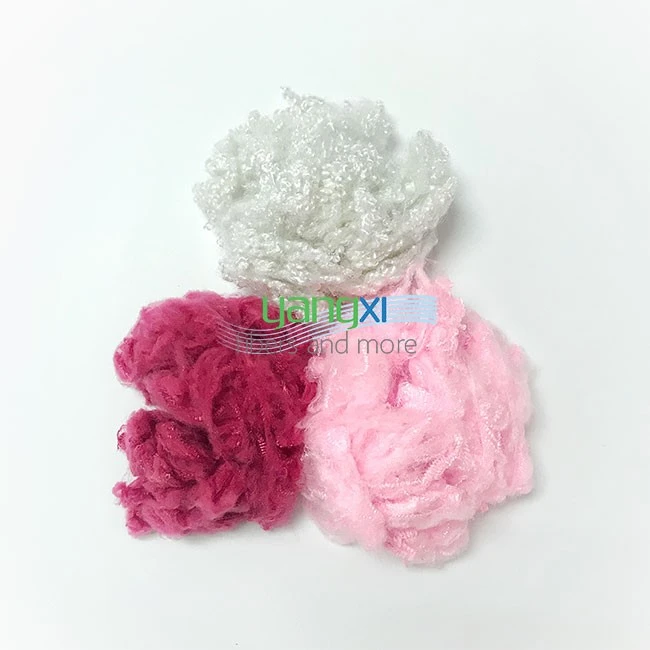
Conjugated polyester fiber is a type of synthetic fiber made by combining two or more different polymers. This unique structure gives the fiber special properties, such as high resilience, good bulkiness, and excellent moisture - wicking ability. It is commonly used in applications like Staple Fiber For Padding, Hollow Conjugated Non - Siliconized Polyester Staple Fiber, and Pillow Filling Fiber.
Factors Affecting Dyeability
Chemical Structure
The chemical structure of conjugated polyester fiber plays a crucial role in its dyeability. Polyester is a hydrophobic polymer, which means it has a low affinity for water - based dyes. The tightly packed molecular chains of polyester make it difficult for dye molecules to penetrate the fiber. However, the conjugated structure can sometimes introduce some modifications that may affect the dye uptake. For example, if the conjugated components have different chemical properties, it might create more accessible sites for dye molecules to attach.
Fiber Morphology
The physical morphology of the fiber also impacts dyeability. The cross - sectional shape, surface area, and porosity of the conjugated polyester fiber are important factors. Fibers with a larger surface area or more porous structure tend to have better dye uptake. Hollow conjugated fibers, for instance, may have a higher dyeability compared to solid fibers because the hollow core can provide additional space for dye molecules to enter and be retained.
Dye Type
The type of dye used is another significant factor. Disperse dyes are commonly used for dyeing polyester fibers. These dyes are non - ionic and have low water solubility. They work by diffusing into the fiber at high temperatures. Acid dyes, on the other hand, are not suitable for polyester because polyester fibers do not have the necessary functional groups to interact with acid dyes. Reactive dyes, which form covalent bonds with the fiber, are also not typically used for polyester due to the lack of reactive sites on the polyester molecule.
The Dyeing Process of Conjugated Polyester Fiber
Pretreatment
Before dyeing, the conjugated polyester fiber usually undergoes a pretreatment process. This step is essential to remove any impurities, such as spinning oils and dirt, from the fiber surface. A common pretreatment method is scouring, which involves treating the fiber with a detergent solution at a specific temperature and pH. This helps to improve the wettability of the fiber and enhance the dyeing effect.
Dyeing Conditions
The dyeing process of conjugated polyester fiber typically requires high temperatures and pressures. Disperse dyes are usually applied at temperatures between 120 - 130°C in a closed dyeing system. The high temperature helps to open up the molecular chains of the polyester fiber, allowing the dye molecules to diffuse into the fiber. The pH of the dye bath also needs to be carefully controlled. A slightly acidic pH (around 4 - 5) is often optimal for disperse dyeing of polyester.
After - treatment
After dyeing, an after - treatment process is necessary to improve the color fastness of the dyed fiber. This may involve washing the fiber with a reducing agent to remove any surface - bound dyes and then treating it with a fixing agent. The fixing agent helps to form a stable bond between the dye and the fiber, preventing the dye from bleeding or fading during subsequent use.
Challenges in Dyeing Conjugated Polyester Fiber
Despite the established dyeing methods, there are still some challenges in dyeing conjugated polyester fiber. One of the main challenges is achieving uniform dyeing. The conjugated structure may cause uneven dye uptake, resulting in color variations within the fiber. This can be particularly problematic when producing large - scale batches of dyed fiber.
Another challenge is the environmental impact of the dyeing process. The high - temperature and high - pressure dyeing conditions require a significant amount of energy. Additionally, the use of certain chemicals in the dyeing and after - treatment processes can generate wastewater that needs to be properly treated to meet environmental standards.
Solutions to Improve Dyeability
Modifying the Fiber Structure
One approach to improve the dyeability of conjugated polyester fiber is to modify its structure. For example, incorporating functional groups into the polyester molecule can increase its affinity for dyes. This can be achieved through chemical modification during the fiber - spinning process.
Using Dyeing Aids
Dyeing aids can be used to enhance the dyeing process. These aids can help to improve the dispersion of dyes, increase the dye uptake, and reduce the dyeing time. For example, carriers can be added to the dye bath to facilitate the diffusion of dye molecules into the fiber.
Advanced Dyeing Technologies
New dyeing technologies, such as supercritical fluid dyeing, are being explored to overcome the challenges of traditional dyeing methods. Supercritical fluid dyeing uses supercritical carbon dioxide as a solvent instead of water, which can reduce the environmental impact and improve the dyeing efficiency.

Conclusion
In conclusion, while conjugated polyester fiber presents some challenges in terms of dyeability due to its chemical structure and hydrophobic nature, it is possible to achieve satisfactory dyeing results through proper pretreatment, appropriate dye selection, and optimized dyeing conditions. As a supplier of conjugated polyester fiber, we are committed to providing high - quality products and working with our customers to find the best solutions for their dyeing needs.
If you are interested in purchasing our conjugated polyester fiber for your specific applications, whether it is for Staple Fiber For Padding, Hollow Conjugated Non - Siliconized Polyester Staple Fiber, or Pillow Filling Fiber, please feel free to contact us for further discussions and procurement negotiations.
References
- "Synthetic Fibers: Nylon, Polyester, Acrylic, Polyolefin" by H. Mark, N. M. Bikales, C. G. Overberger, and G. Menges.
- "Textile Dyeing and Finishing" by Shishir Kumar Behera.