

How does the colorfastness to washing of Low Melt Polyester Fiber compare with other synthetic fibers?
Jun 15, 2026
Hey there, fellow fiber enthusiasts! I'm a supplier of Low Melt Polyester Fiber, and today I'm gonna dive deep into how the colorfastness to washing of Low Melt Polyester Fiber stacks up against other synthetic fibers.
First off, let's talk about what colorfastness to washing means. Simply put, it's how well a fiber retains its color when it goes through the washing process. This is super important for products like clothing, home textiles, and even industrial fabrics. No one wants their favorite shirt to fade after a few washes, right?
Now, let's take a look at Low Melt Polyester Fiber. This fiber is pretty unique. It has a lower melting point compared to regular polyester, which makes it great for bonding with other fibers. But how does it fare in terms of colorfastness to washing?
One of the key factors that affect colorfastness is the dyeing process. Low Melt Polyester Fiber can be dyed using a variety of methods, and modern dyeing techniques have made it possible to achieve excellent colorfastness. The dyes used are designed to bond well with the fiber, which helps to prevent color bleeding and fading during washing.
When we compare Low Melt Polyester Fiber with other synthetic fibers, like nylon and acrylic, we can see some interesting differences. Nylon is known for its strength and durability, but its colorfastness to washing can be a bit hit or miss. Some nylon fabrics may fade or bleed color over time, especially if they're exposed to harsh detergents or high temperatures.
Acrylic, on the other hand, is often praised for its vibrant colors and good colorfastness. However, it can be more prone to pilling and static buildup compared to Low Melt Polyester Fiber.
Let's break it down further. In terms of resistance to fading, Low Melt Polyester Fiber generally holds up quite well. It can withstand multiple washes without significant color loss, especially when proper washing instructions are followed. This is because the low melting point of the fiber allows for a more uniform dye distribution, which helps to lock in the color.
Another aspect to consider is the environmental impact. Low Melt Polyester Fiber is often more eco - friendly compared to some other synthetic fibers. It can be recycled, and the production process is relatively energy - efficient. This is a big plus for consumers who are conscious about the environment.
Now, let's take a look at some specific applications. In the clothing industry, Low Melt Polyester Fiber can be used in a variety of garments, from activewear to casual wear. Its good colorfastness means that the clothes will look great for a long time, even with regular washing.
In home textiles, such as curtains and bedding, Low Melt Polyester Fiber can provide both durability and color retention. You don't have to worry about your curtains losing their color after a few washes, which is a huge advantage.
If you're in the market for high - quality synthetic fibers, you might also be interested in some of our other products. Check out our Flame Retardant Polyester Staple Fiber, Bosilun Tops, and Virgin Polyester Tops. These products offer unique properties and can be a great addition to your manufacturing processes.
So, if you're looking for a synthetic fiber with excellent colorfastness to washing, Low Melt Polyester Fiber is definitely worth considering. It combines the benefits of good color retention, durability, and eco - friendliness. Whether you're a clothing manufacturer, a textile designer, or just someone who wants high - quality fibers for your projects, we've got you covered.
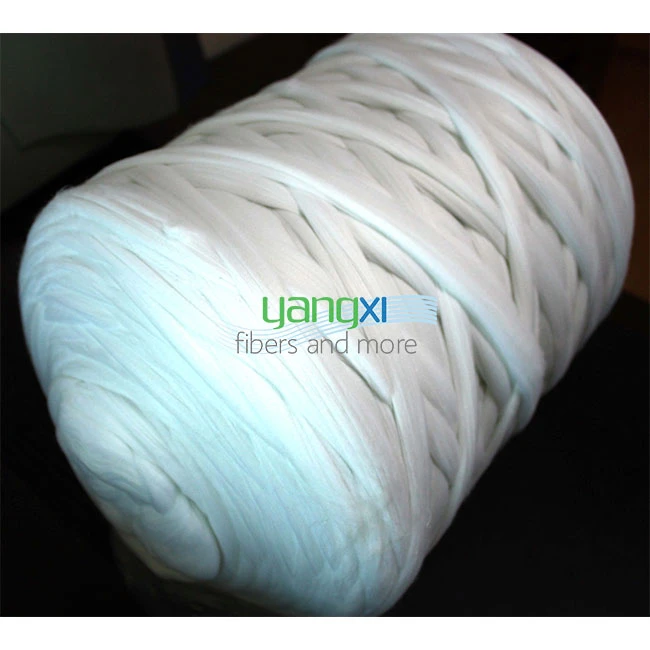

If you're interested in purchasing Low Melt Polyester Fiber or any of our other products, feel free to reach out. We're always happy to have a chat and discuss your specific needs. We can provide samples, answer your questions, and help you find the best fiber solution for your business.
In conclusion, Low Melt Polyester Fiber stands out when it comes to colorfastness to washing compared to other synthetic fibers. Its unique properties make it a great choice for a wide range of applications. So, don't hesitate to get in touch and start exploring the possibilities with us.
References
- Textile Chemistry and Coloration, Third Edition by Harold A. Lappin and Christopher M. McDonald
- Synthetic Fibers: Nylon, Polyester, Acrylic, Olefin by John W. S. Hearle