
The Rise of Blended Lightweight Fabrics: Aligning Consumer Experience, Manufacturing Efficiency, and Eco-Trends
May 27, 2026
In recent years, the international textile marketplace has witnessed a major shift toward blended lightweight fabrics and premium natural composites. From commercial garment manufacturing lines to e-commerce retail networks, these lightweight woven and knitted solutions have emerged as core categories for contemporary collection planning. This widespread popularity is driven by three interconnected industrial factors: shifting consumer behavior, optimized production logistics, and the global progression toward sustainable product architecture.
The Consumer Shift: Prioritizing Feel and Cross-Scenario Adaptability
Modern consumer demand has evolved from purely aesthetic preferences toward a comprehensive focus on wearable comfort and multi-scenario performance. While pure natural fibers like cotton and linen possess excellent inherent breathability and skin-friendly textures, their unblended forms carry notable structural limitations. Traditional pure linen is highly prone to severe wrinkling, pure cotton suffers from dimensional distortion during standard laundering, and premium silk demands rigorous, high-cost maintenance.
Advanced engineering resolves these issues by optimizing composition blends. Mixing natural cellulosics with high-performance synthetic materials preserves organic breathability while infusing the final textile with excellent wrinkle recovery and dimensional stability. Furthermore, the lightweight construction of these contemporary fabrics allows for multi-seasonal layering, making them ideal for spring/summer outerwear or autumn/winter inner layers. This structural versatility appeals directly to consumers looking for adaptable, office-to-leisure garments that fit busy daily schedules.
The Industrial Advantage: Higher Processing Efficiency and Lower Inventory Risk
From the perspective of commercial midstream producers and garment manufacturing facilities, lightweight blends provide significant operational advantages. These materials deliver a highly consistent fabric drape and reliable grain alignment, which directly increases cutting and sewing efficiency on automated production lines, reduces pattern deviation, and lowers post-purchase product return rates.
For global distributors and textile merchants, these adaptable fabrics support all-season supply strategies and quick-response manufacturing models. Because they support small-batch customization and rapid stock turnover, they effectively lower bulk warehouse inventory risks and shorten re-order cycles. This structural stability helps mills capture strong sales volumes while protecting operating margins. Additionally, the visual appeal of these fabrics-characterized by a refined drape and soft light-reflecting properties-makes them highly effective for digital marketing and e-commerce live-streaming, generating immediate buyer engagement and encouraging retailers to secure early raw material allocations.
Strategic Sustainability: Elevating Brands with Advanced Environmental Fibers
As global environmental regulations tighten and green consumerism becomes a mainstream market requirement, the integration of verified eco-friendly components into lightweight fabrics has become essential for premium brand positioning. Transitioning to sustainable raw materials allows manufacturers to deliver high-performance collections that conform to strict global compliance mandates.
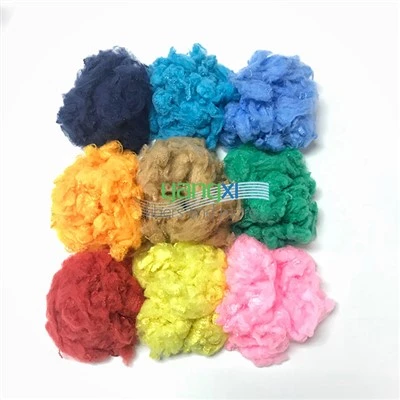
Integrating premium Recycled Polyester Staple Fiber into lightweight matrices allows producers to achieve excellent tensile strength and structural longevity while using traceable, post-consumer circular material loops. For fashion lines aiming to address microplastic persistence, utilizing the advanced CiCLO® biodegradable series or bio-based PLA fiber groupings offers an effective framework aimed at mitigating long-term environmental footprints without altering standard spinning machinery. Furthermore, the deployment of certified OEKO-TEX certified traceable fibers allows export-oriented weaving mills to verify chemical safety and processing transparency directly to brand compliance auditors.
For specialized commercial sectors, leisure outdoor gear, and contract interior applications, these lightweight blends can be augmented with functional traits. Incorporating high-durability Bosilun fibers optimizes dye uptake and tactile soft textures, while blending specialized Flame Retardant components or precision-engineered Low Melt bonding fibers introduces specific industrial safety ratings without adding bulk. By strategically combining these technical environmental fibers with natural substrates, manufacturers can engineer smart, premium fabrics that satisfy the growing trend toward light-business and light-outdoor lifestyles. This balanced approach to raw material development allows companies to better support their underlying operating margins, helping progressive enterprises navigate shifting regulatory and consumer landscapes while reinforcing long-term supply chain resilience.