
What Are Staple Fibers and Filaments? Differences in Applications
Jul 26, 2025
Staple fibers and filaments are two fundamental categories of textile fibers, distinguished primarily by their length and processing requirements. Their unique characteristics lead to distinct applications across the textile industry.
1. Definitions and Core Characteristics
1)Staple Fibers
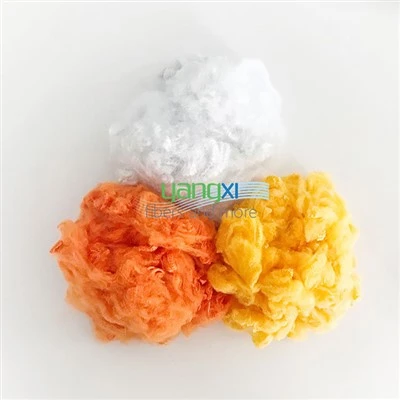
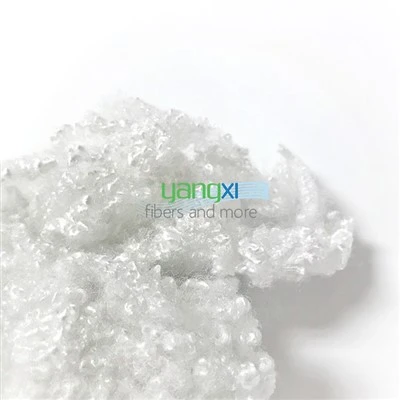
Staple fibers are short, discontinuous fibers, typically ranging from a few millimeters to several tens of millimeters in length. They can be:
- Natural (e.g., cotton, linen, wool, which grow as short fibers).
- Synthetic (e.g., polyester staple, acrylic staple, produced by cutting continuous filaments into short lengths).
- Regenerated (e.g., viscose staple, made from natural cellulose and cut into short segments).
Key Traits:
- Require spinning to form yarn: Their short length means they must be twisted together during spinning to create continuous, usable yarns.
- Tend to be finer and more prone to breakage individually but gain strength when spun into yarns.
2)Filaments
Filaments are continuous, unbroken fibers with lengths reaching kilometers. They include:
- Natural (e.g., silk, where a single cocoon produces a continuous filament).
- Synthetic (e.g., polyester filament, nylon filament, extruded as continuous strands during manufacturing).
- Regenerated (e.g., viscose filament, spun as continuous threads).
Key Traits:
- Ready for direct use: No spinning is needed-filaments can be woven or knitted directly.
- Classified as monofilaments (single continuous fiber) or multifilaments (bundles of multiple filaments). Multifilaments retain strength even without twisting.
2. Differences in Applications
The distinct properties of staple fibers and filaments lead to divergent uses in textiles:
| Aspect | Staple Fibers | Filaments |
|---|---|---|
| Processing | Require spinning into yarns first (e.g., cotton spinning, wool spinning). | Can be woven/knitted directly or lightly twisted into yarns. |
| Fabric Characteristics | Yarns have a fuzzy, textured surface; fabrics are often soft, breathable, and have a matte finish (e.g., cotton shirts, wool sweaters). | Fibers/yarns are smooth and sleek; fabrics tend to be lustrous, drape well, and feel silky (e.g., silk blouses, nylon stockings). |
| Common Uses | - Apparel: Casual wear (T-shirts, jeans), underwear, winter sweaters. | - Apparel: High-end garments (dresses, suits), lingerie, sportswear (e.g., moisture-wicking polyester filament). |
| - Home textiles: Bed sheets, towels, blankets (valued for softness and absorbency). | - Home textiles: Curtains, upholstery (valued for drape and durability). | |
| - Industrial: Heavy-duty fabrics (canvas, burlap) when blended for strength. | - Industrial: Technical textiles (parachutes, ropes, filter fabrics) due to high tensile strength. |
Summary
Staple fibers excel in creating soft, breathable, and textured fabrics through spinning, making them ideal for everyday wear and cozy home textiles. Filaments, with their continuous length and smooth texture, are favored for sleek, durable, and high-performance fabrics, used in luxury apparel, technical gear, and applications requiring strength or luster. Their divergent processing needs and aesthetic/functional traits ensure they serve complementary roles in the textile industry.