
Why Pique Knit Fabrics Prevent Skin-Cling and Moisture Trapping
Sep 07, 2026
In warm weather and high-active wear scenarios, standard flat-knit jersey tees frequently stick to damp skin, creating an uncomfortable, clammy sensation. In contrast, polo shirts and athletic tops constructed from pique knit fabric maintain surface dryness and ventilation even during heavy perspiration.
This performance advantage stems not from chemical topcoats, but from the three-dimensional geometric structure of the pique mesh knit itself, which significantly elevates thermal dissipation and air permeability compared to smooth, flat fabrics.
1. Structural Geometry: The Mechanics of 3D Honeycomb Mesh Construction
Unlike dense, flat plain knits that lay directly against the epidermis, pique fabric-often termed pique mesh-is manufactured using an alternating tuck-stitch knitting technique:
- Three-Dimensional Surface Topography: The pique knitting process forms a uniform array of raised, honeycomb-like pores across the fabric surface.
- Micro-Air Gap Creation: The textured 3D topography prevents the fabric from making complete, flat contact with human skin. The resulting micro-gaps allow continuous ambient air circulation between the skin and the textile surface.
- Elimination of Surface Cling: By reducing total skin contact surface area, pique construction prevents sweat from creating a liquid seal between fabric and body, eliminating the uncomfortable "stickiness" common in wet flat cotton.
2. Air Permeability, Thermal Dissipation, and Physical Durability
The structural open-cell configuration of pique mesh delivers distinct mechanical and moisture-management advantages for functional garments:
Structural Performance Matrix: Pique Mesh Knit vs. Standard Flat Single Jersey
| Performance Attribute | Pique Mesh Knit Construction | Standard Flat Single Jersey |
| Surface Geometry | 3D honeycomb mesh with micro-air channels. | Smooth, flat, and solid contact plane. |
| Skin Contact Area | Low (separated by elevated textural points). | High (full planar contact against skin). |
| Moisture Evaporation Speed | Accelerated; airflow passes freely through pores. | Moderate; sweat traps between fabric and skin. |
| Tensile Stability & Resistance | High structural stability; highly tear-resistant. | Moderate; prone to stretching out of shape. |
| Ideal Wear Applications | Athletic polo shirts, tennis wear, corporate sportswear. | Casual base layer T-shirts, loungewear. |
While pique knit exhibits a slightly textured surface hand compared to smooth jersey cotton, its superior airflow, rapid drying rate, reduced odor accumulation, and enhanced mechanical strength make it the preferred knit structure for active summer apparel.
3. Raw Material Composition: Blending Comfort with Functional Engineering
Pique fabrics are traditionally knitted from pure cotton or cotton-polyester blends, marrying natural touch with synthetic durability:
- Pure Cotton Pique: Offers high natural softness and breathability but relies entirely on the 3D mesh structure for drying speed.
- Poly-Cotton Blends: Integrating synthetic fibers into cotton pique knits accelerates moisture transport, improves wash-and-wear dimensional stability, and prevents post-laundering shape warping in polo collars and cuffs.
4. Elevating Knitted Fabric Performance with Advanced Synthetic Inputs
To maximize the structural recovery, color retention, and moisture-wicking efficiency of pique mesh fabrics, spinning and knitting mills pair natural yarns with engineered technical synthetic fibers:
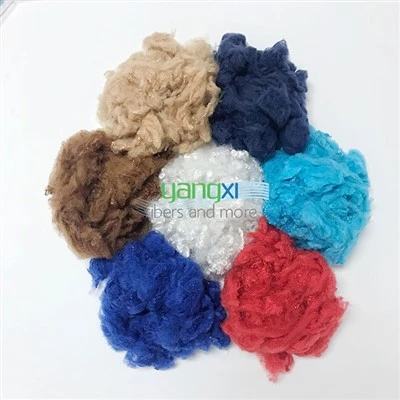
- Sustainable Synthetic Blends: Incorporating GRS-certified Recycled Polyester Staple Fiber into cotton pique blends significantly enhances tensile recovery and drying speed while meeting brand sustainability targets. Utilizing pristine recycled PET bottle flakes ensures consistent fiber denier, minimizing surface pilling and stabilizing fabric shrinkage after repeated commercial washing.
- Deep-Dyeing Acrylic Modifications: For intense color vibrancy in athletic polo shirts and activewear, mills integrate specialized fiber modifications like Bosilun. This fiber achieves deep dye uptake at lower processing temperatures, offering high colorfastness to light and perspiration while preserving the soft, breathable hand of the pique structure. Deploying these advanced materials enhances overall Material Performance, strengthens Supply Chain Resilience, and reinforces Global Sourcing Strategies.
Technical Summary for Apparel Sourcing Directors
Pique fabric prevents sweat-cling through its 3D honeycomb surface geometry, which establishes a continuous micro-air layer between skin and garment. Combining pique mesh construction with certified recycled poly-cotton yarns delivers dimensionally stable, quick-drying athletic and corporate sportswear.
Leveraging our integrated cross-border supply chain network across China, Thailand, and Vietnam, we support global trade partners in sourcing certified synthetic fiber inputs, optimizing knit yarn formulations, and executing resilient Global Sourcing Strategies.