
China’s Home Textiles Exports: Stable Jan-Jul 2025 Amid Market Shifts & Tariff Uncertainties
Sep 12, 2025
In the first seven months of 2025, China's home textiles exports maintained overall stability, with total shipments reaching $18.95 billion-a marginal 0.09% year-on-year decline. While exports to the U.S. faced headwinds from lingering tariff uncertainties under the Trump administration, shipments to non-U.S. markets kept growing steadily, underscoring the industry's resilience amid global trade volatility. Below is a detailed breakdown of export trends, market dynamics, and future outlooks.
1. Product-Specific Performance: Mixed Results Across Categories
China's home textiles exports are dominated by seven core categories: bedding, carpets, bed blankets, kitchen & bathroom textiles, curtains, towels, and tablecloths. From January to July, most categories saw stable shipments, except for notable drops in towels and tablecloths:
- Bedding: The largest segment, with exports of $8.18 billion (+0.03% YoY)-stability driven by steady demand for basic bedding like sheets and duvets.
- Carpets: Exports rose 0.65% to $2.48 billion, supported by infrastructure projects in emerging markets (e.g., hotel renovations in Southeast Asia).
- Curtains: A bright spot, with shipments up 2.5% to $1.79 billion-boosted by demand for decorative and energy-efficient curtain fabrics.
- Bed Blankets: Flat at $820 million (+0.03% YoY), reflecting balanced supply and demand for seasonal and year-round blankets.
- Kitchen & Bathroom Textiles: Exports fell 2.2% to $1.84 billion, likely due to softened consumer spending on home renovations in Europe.
- Towels: The steepest decline (-10% YoY to $1.01 billion)-attributed to price competition from low-cost producers like Pakistan and India.
- Tablecloths: Down 9.2% to $450 million, with weak demand from the U.S. restaurant and hospitality sector (still recovering from post-pandemic slumps).
- Other Products: Surged 10.8% to $1.18 billion, including niche items like pet bedding and outdoor cushions-fast-growing segments in lifestyle-driven markets.
2. Market Dynamics: U.S. Decline Offset by Booms in Africa, Central Asia & Latin America
The top five export destinations for China's home textiles are the U.S., EU, ASEAN, Japan, and Australia-but their performance diverged sharply in Jan-Jul 2025:
Top 5 Markets (Jan-Jul 2025)
| Market | Export Value (Billion USD) | YoY Change | Share of Total Exports |
|---|---|---|---|
| U.S. | 5.74 | -6% | 30.3% |
| EU | 2.65 | +7.8% | 14% |
| ASEAN | 1.79 | -18.4% | 9.4% |
| Japan | 1.32 | -2.1% | 7% |
| Australia | 0.62 | -4.5% | 3.3% |
- U.S. Market: The largest single market but a drag on growth-tariff uncertainties led U.S. buyers to delay orders or shift purchases to competitors like India (which saw 5.4% growth in U.S. imports). July alone saw a 6.2% YoY drop in U.S.-bound exports, with the decline widening by 2.3 percentage points from June.
- EU Market: A bright spot, with 7.8% growth-driven by rising demand for eco-friendly home textiles (e.g., organic cotton bedding) and stable consumer spending in Western Europe.
- ASEAN Market: A surprise decline (-18.4%)-linked to slower regional manufacturing (ASEAN's role as a "processing hub" for re-export to the West was hit by U.S. tariff rules on transshipments).
- Emerging Markets: The industry's growth engine-exports to Central Asia jumped 26.7% (with Kyrgyzstan surging 61.8%), Africa rose 29.6%, and Latin America grew 19.3%. These markets are hungry for affordable, durable home textiles for urbanization and middle-class expansion.
3. Regional Export Performance: Zhejiang Leads; Xinjiang & Beijing Surge
China's home textiles exports are concentrated in five coastal provinces/municipalities, but inland regions are gaining momentum:
- Zhejiang: The top exporter ($6.57 billion, +6.2% YoY)-its robust growth comes from a strong ecosystem of small- and medium-sized enterprises (SMEs) specializing in affordable, design-driven home textiles.
- Jiangsu: Exports fell 3.4% to $4 billion, partly due to its higher exposure to the U.S. market (Jiangsu-based firms supply 35% of China's towel exports to the U.S.).
- Shandong: Down 3% to $2.4 billion, with declines in carpet exports to ASEAN.
- Guangdong & Shanghai: Both saw drops (13.8% and 3.6% respectively), tied to weaker demand for high-end home textiles in Japan and Australia.
- Xinjiang & Beijing: Standout growth-Xinjiang's exports surged 38.4% (fueled by its cotton production and access to Central Asian markets), while Beijing jumped 115% (driven by cross-border e-commerce sales to Europe).
4. Global Market Share Shifts: China Loses Ground in U.S., Holds Steady in EU & Japan
In the first six months of 2025, China's share of major global home textiles markets saw mixed trends:
- U.S.: Total U.S. home textiles imports fell 4.4% to $7.93 billion. China's share dropped 0.7 percentage points to 36.9% (imports from China down 15.2%), while India (27.3%, +5.4% YoY) and Pakistan (10.3%, +1.1% YoY) gained ground.
- EU: Total imports rose 13.7% to $5.38 billion. China's share edged up 0.6 percentage points to 36% (imports from China up 22.8%), outpacing growth from Pakistan (22.9%, +18.5% YoY) and India (11.6%, +15.4% YoY).
- Japan: Total imports grew 2.2% to $1.43 billion. China's share slipped 0.4 percentage points to 73% (still dominant), while Vietnam (14.6%, +0.4% YoY) and India (2.8%, +15.4% YoY) made modest gains.
5. Future Outlook: Opportunities & Risks Ahead
Key Trends Shaping H2 2025
1. Global Economic Uncertainty: Short-term warmth from U.S. fiscal/monetary expansion may boost trade, but long-term risks (geopolitics, fiscal strains) persist. Fed rate cut expectations could soften U.S. demand but keep it resilient.
2. U.S. Tariff Chaos: The 90-day pause on 24% tariffs (extended from August 12 to November 10) offers a temporary reprieve, but legal challenges loom: A U.S. federal appeals court ruled the tariffs unconstitutional (effective October 14), with the Trump administration appealing to the Supreme Court (a decision not expected until summer 2026). The U.S. Treasury is preparing a "Plan B" to maintain tariffs if the appeal fails.
3. Wider U.S. Tariffs & Transshipment Scrutiny: Since August 7, the U.S. has imposed "reciprocal tariffs" on home textiles exporters worldwide (e.g., 15% on Turkey/South Korea, 20% on Vietnam/Bangladesh, 40% on Laos/Myanmar, 25% + extra 25% on India). Critically, 40% extra tariffs target transshipment (e.g., "China-made materials → ASEAN processing → U.S. export"). ASEAN nations (Thailand, Vietnam, Singapore) have tightened rules on "substantial processing" (e.g., regional value content, HS code changes), disrupting traditional supply chains.
4. U.S. Sourcing Diversification: Per the 2025 USFIA report, U.S. brands are shifting to "de-risked" sourcing:
- Asia remains dominant-Vietnam (100% of firms sourcing there), Cambodia (94%), and Bangladesh (88%) are gaining share.
- China retains its role as a raw material hub-80% of U.S. firms buy yarn, fabric, and trims from China (critical for home textiles production).
- Limited growth in Western Hemisphere sourcing (only 44% plan to expand) due to raw material shortages.
Implications for Chinese Exporters
The rest of 2025 will hinge on tariff outcomes and base effects. The 90-day tariff pause (until November 10) creates a window for stable shipments, but Q4 may face pressure from last year's high base, softening global demand, and post-"frontloading" inventory digestion. Exporters should:
- Double down on emerging markets (Africa, Central Asia, Latin America) to reduce U.S. reliance.
- Invest in eco-friendly and high-value products (e.g., recycled fabric bedding) to compete in the EU.
- Navigate transshipment rules carefully-prioritize "substantial processing" in ASEAN to avoid U.S. penalties.
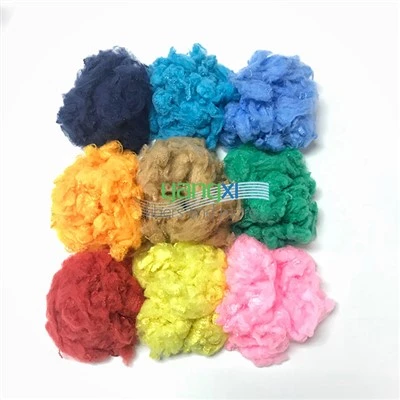
For home textiles manufacturers and exporters, the quality of raw materials directly impacts product competitiveness-especially in fast-growing segments like bedding, curtains, and carpets. Our polyester and nylon fibers (including polyester filament, polyester staple fiber, and nylon filament) are widely used in these core categories:
- Polyester staple fiber enhances the durability and wrinkle-resistance of bedding and towels, ideal for price-sensitive emerging markets.
- Nylon filament adds strength and softness to high-end curtains and outdoor cushions, aligning with EU demand for premium, long-lasting home textiles.
Our fibers are engineered to meet the diverse needs of global home textiles markets-from affordable, mass-market products to eco-friendly, design-driven lines. If you're looking to optimize your raw material supply chain amid market shifts, feel free to reach out for samples or tailored solutions.
#China Home Textiles Export #Global Home Textiles Market #Textile Export Trends #Polyester Nylon Fibers #Home Textiles Sourcing