
Industry Analysis: U.S. Normalized Textile Tariffs Implemented As Exporters Accelerate Global Realignment
Jul 30, 2026
The official implementation of a 12.5% normalized additional duty on Chinese textile exports to the United States marks a pivotal transition for international trade. Domestic exporters across home textiles, synthetic filament fabrics, and finished apparel face immediate margin recalibration, triggering a structural realignment phase across the broader textile export landscape.
Because standard garment and commodity fabric manufacturing operates on narrow net profit margins-frequently under 1% for volume-driven basic textiles-the additional tariff absorbs traditional trade margins. In response, low-margin, high-volume commodity orders are migrating toward alternative manufacturing hubs in Southeast Asia, including Vietnam, Bangladesh, and Indonesia. In response, textile mills in major manufacturing hubs are fundamentally adjusting their foreign trade strategies to preserve long-term operational viability.
1. Strategic Countermeasures: Split-Stage Production and Market Diversification
To mitigate trade barriers and maintain international market share, domestic textile manufacturers are executing multi-pronged supply chain realignments:
- Split-Stage Manufacturing Models: Apparel groups are increasingly adopting a segmented supply chain framework. Under this model, high-efficiency domestic mills handle advanced yarn spinning and fabric weaving, while final garment cutting and sewing are completed in Southeast Asian facilities-effectively mitigating tariff impacts while leveraging domestic fabric quality.
- Emerging Market Expansion: Exporting enterprises are systematically reducing dependency on the U.S. consumer market. Exporters are deepening trade networks across RCEP partner nations, the Middle East, Central Asia, Latin America, and Russia, establishing broader and more diversified foreign trade channels.
- High-Value Functional R&D: Textile manufacturers are shifting focus from price-driven commodity weaving to high-margin functional fabric development. Investments in antimicrobial, moisture-wicking, and flame-retardant fabric technologies are generating product differentiation, allowing mills to offset duty-induced price disadvantages through higher value-added margins.
2. Supply Chain Restructuring and Export Trends
Data from trade association surveys indicates that while direct textile export volumes to the U.S. declined during the first half of the year, shipments to emerging markets recorded steady, compensating growth.
Key Industry Dynamics Matrix
| Operational Vector | Traditional Commodity Export Model | Restructured High-Value Export Model |
| Target Consumer Markets | Heavy Reliance on U.S. Direct Imports | Diversified: RCEP, Middle East, Central Asia, Latin America |
| Manufacturing Architecture | Single-Location Domestic Production | Split-Stage (Domestic Fabric + Regional Assembly) |
| Product Focus | Low-Margin Basic Woven Fabrics | Functional Fabrics (Antimicrobial, Moisture-Wicking, FR) |
| Profit Margin Profile | Vulnerable (<1% Net Margin) | High Value-Add / Insulated against Tariff Volatility |
3. Mitigating Policy Risk Through Functional Material Engineering
As low-cost, volume-based export models become unsustainable, long-term competitiveness depends on product innovation and material performance upgrades.
To assist textile mills in navigating international trade shifts, integrated raw material suppliers are providing specialized functional fiber solutions that support compliance and technical differentiation:
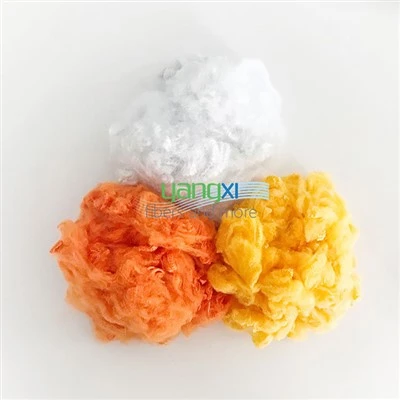
- Sustainable Compliance via Recycled Polymers: To meet strict environmental mandates in emerging and global markets, spinning mills are integrating GRS-certified Recycled Polyester Staple Fiber into export fabric lines. This fiber offers high tensile strength, excellent spinning uniformity, and verifiable sustainability credentials, helping fabric suppliers pass international brand audits while optimizing raw material overhead.
- Advanced Functional Safety Solutions: For institutional, protective, and high-performance commercial fabric lines requiring certified fire safety, incorporating permanent Flame Retardant fiber additives provides high thermal protection. Combining these with specialized Special Environmental Fibers enables textile mills to engineer durable, multi-functional fabrics that command premium export pricing and reinforce overall Supply Chain Resilience.
Strategic Outlook for Global Trade Partners
The restructuring of the global textile supply chain highlights the need for adaptable Global Sourcing Strategies. While routine commodity weaving continues to relocate, domestic mills that prioritize material innovation, functional finishing, and market diversification remain critical partners for international apparel brands.
Leveraging our integrated cross-border supply chain networks across China, Thailand, and Vietnam, we support international trade partners in sourcing advanced functional fiber inputs, optimizing tariff structures, and delivering consistent material performance globally.