
Post-Consultation Optimism: Can Textile & Apparel Exports Achieve A Q4 Rebound?
Nov 18, 2025
Narrowing Decline in 1-10M Signals Resilience, While U.S.-China Talks Deliver Key Market Uplifts
For nearly a decade, China's textile and apparel exports have shifted away from a high-growth cycle into a period of cyclical adjustment. Although the 1-10 month export decline in 2025 has significantly narrowed compared to the -9.48% seen in 2020, recent Customs data shows total exports for the sector reached $243.94 billion through October, still representing a 1.6% year-on-year decrease. Against this backdrop, the substantive consensus reached during recent U.S.-China economic and trade consultations presents a critical opportunity for the industry to achieve an export rebound in Q4 and a stable year-end close.

The Double Constraint: Tariffs and Supply Chain Turbulence
The core reasons for the slowdown in export growth can be traced to two major constraints:
- High Export Costs from Tariff Disputes: Long-term trade friction previously resulted in a cumulative U.S. tariff rate of 37.5%-55% on Chinese textile and apparel, significantly higher than rates levied on Southeast Asian competitors. This cost disparity caused some orders to shift to lower-tariff regions. Data shows that apparel exports dropped by 3.8% (in USD terms) from January to October 2025, with the decline widening to 15.9% in October alone, acting as a major drag on the overall sector.
- Uncertainty from Global Supply Chain Restructuring: The short-cycle and time-sensitive nature of the textile industry demands high supply chain stability. Export controls, logistics barriers, and volatility in core raw materials like cotton have previously made enterprises cautious about accepting new orders, restricting the release of export momentum.

How Consultations May Unlock the Export Rebound
The recent trade consensus delivers key breakthroughs that may alleviate these constraints:
1. Dual-Directional Tariff Optimization: Revitalizing Price Competitiveness
Tariff adjustments offer the most direct benefit. The U.S. announcement to suspend the 50% "penetration rule" on export controls for one year, coupled with the extended pause on some retaliatory tariffs, lowers the effective weighted average tariff rate on Chinese goods. This significantly reduces the price gap between China and key competitors like Vietnam and Bangladesh, creating crucial conditions for recovering lost orders.

Crucially, China also responded by lowering import tariffs on U.S. cotton from 26% to 11%. This creates a "dual-benefit" scenario: lower tariffs on the export side boost competitiveness, while reduced duties on the import side decrease raw material costs. Market anticipation of cost optimization was immediate: ICE cotton futures rose by 1.38% on October 29th, confirming expectations of improved industry cost stability and profitability.
2. Supply Chain Stabilization: Restoring Trade Certainty
The core breakthrough addresses the uncertainty in global supply chain restructuring. By suspending logistics-related Section 301 investigation measures, both sides have institutionally removed hidden barriers in shipping and maritime transport.

This consensus is vital for textiles. Previous logistics uncertainty often forced companies to forego short-term orders or incur high storage costs. The newfound certainty in delivery channels will greatly enhance supply chain efficiency. Furthermore, extending exclusions on certain tariffs safeguards enterprises from sudden "tariff attacks" on raw material procurement, enabling companies to formulate longer-term production plans and build resilience for export growth.
3. Restored Confidence & Liquidity: Activating Order Demand
Despite pressures, China's textile and apparel exports to the U.S. still account for 15.3% of China's total global exports in the first three quarters, highlighting its importance. The substantive breakthrough in the consultations fundamentally improves the market's outlook on U.S.-China economic relations, rapidly restoring confidence.

This renewed confidence drives momentum in two ways:
- Delayed Orders Flow-in: Orders previously held back by policy uncertainty are expected to materialize in Q4. Major enterprise new order indices have been in the expansion zone for six consecutive months, showing industry leaders are actively securing business.
- Demand-Side Boost: Improved trade relations are expected to halt the decline in China's market share in the U.S. Concurrently, the prospect of a potential Fed rate cut improves global liquidity, reducing financing costs for U.S. importers and creating an added boost to demand.
The Path from "Decline Narrowing" to "Moderate Growth"
The convergence of three major factors-optimized tariff costs, stabilized supply chains, and restored confidence-is expected to drive U.S.-bound exports from a phase of "decline narrowing" toward "moderate growth" in the final quarter. Given the cumulative export decline of only 1.6% through October, achieving a moderate growth of 5%-8% in November and December could effectively offset earlier slowdowns, ensuring a stable year-end result. Despite some uncertainty in short-term foreign demand recovery, the core advantages of China's complete textile value chain, strong supporting capabilities, and diversified market layouts remain solid. With favorable policy tailwinds, the sector's export rebound is highly anticipated.
Your Partner in Global Supply Chain Stability
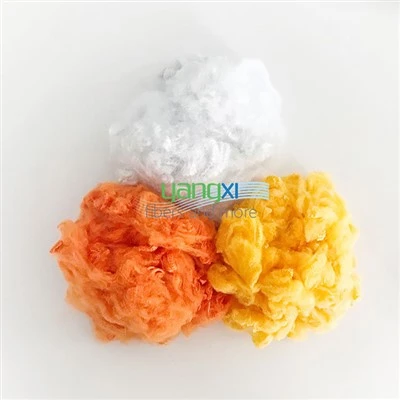
Navigating complex trade policy and supply chain volatility requires reliable raw material sourcing. As a major Jiangyin-based exporter, we specialize in high-quality Polyester Filament Yarn and Polyester Staple Fiber (including our sustainably certified Recycled Polyester line). Our complete and stable supply chain, combined with our ability to manage international logistics, ensures your production planning remains uninterrupted and cost-competitive, allowing you to quickly capitalize on the renewed market confidence and secured orders.
Ready to optimize your raw material costs and secure stable supply for your Q4 orders? Contact Jiangyin Yangxi International Trade today to discuss our filament and staple fiber solutions.
Tags: U.S.-China Trade, Textile Export Outlook, Supply Chain Stability, Tariff Reduction, China Textile Industry, Export Order Rebound, Polyester Filament