

Can PLA fiber be used in 3D printing?
Jul 15, 2026
Can PLA Fiber be used in 3D printing?
Hey there, folks! I'm a supplier of PLA fiber, and I've been getting a lot of questions lately about whether PLA fiber can be used in 3D printing. Well, let's dive right into it and find out.
First off, let's talk a bit about what PLA fiber is. PLA stands for polylactic acid, which is a biodegradable thermoplastic made from renewable resources like corn starch or sugarcane. It's known for being eco - friendly, having a relatively low melting point, and being easy to work with. These qualities make it a popular choice in a lot of industries, but how does it fare in 3D printing?
Advantages of Using PLA Fiber in 3D Printing
One of the biggest advantages of using PLA fiber in 3D printing is its environmental friendliness. In today's world, where we're all trying to be more sustainable, using a biodegradable material like PLA is a no - brainer. Unlike some other plastics used in 3D printing, PLA will break down over time, reducing the amount of plastic waste in landfills.
Another great thing about PLA fiber is its low melting point. It typically melts at around 180 - 220 degrees Celsius, which is lower than many other 3D printing materials. This means that your 3D printer doesn't have to work as hard to heat up the material, saving energy and potentially reducing wear and tear on the printer.
PLA also has excellent layer adhesion. When you're 3D printing, getting the layers to stick together properly is crucial for a strong and well - formed print. PLA fiber does a great job of this, resulting in prints that are less likely to delaminate or fall apart.
The surface finish of PLA prints is usually quite smooth. This means that you can get a high - quality, professional - looking print without having to do a lot of post - processing. Whether you're printing a small figurine or a functional part, the smooth finish can make a big difference.
Challenges of Using PLA Fiber in 3D Printing
However, it's not all sunshine and rainbows. There are a few challenges that come with using PLA fiber in 3D printing.
One of the main issues is its brittleness. PLA can be a bit brittle, especially compared to some other materials like ABS. This means that if your print is subjected to a lot of stress or impact, it might break more easily. So, if you're printing something that needs to be very durable, like a tool or a part for a machine, you might need to think twice about using PLA.
PLA is also sensitive to humidity. If it absorbs too much moisture from the air, it can cause problems during the printing process. The moisture can turn into steam when the PLA is melted, leading to bubbles and a poor - quality print. To avoid this, you need to store your PLA fiber in a dry place and, if possible, use a filament dryer.
Another challenge is that PLA has a relatively low heat resistance. If your print is going to be exposed to high temperatures, it might start to deform. This limits its use in applications where the printed object will be near a heat source, like in a car engine or a kitchen appliance.
Applications of PLA Fiber in 3D Printing
Despite these challenges, there are many great applications for PLA fiber in 3D printing.
In the field of art and design, PLA is a popular choice. Artists can use it to create intricate sculptures, jewelry, and decorative items. The smooth finish and wide range of colors available make it perfect for bringing creative ideas to life.
Educational institutions also love using PLA for 3D printing. It's a safe and easy - to - use material, making it ideal for students to learn about 3D printing technology. Teachers can use it to print models of scientific concepts, historical artifacts, or geometric shapes.
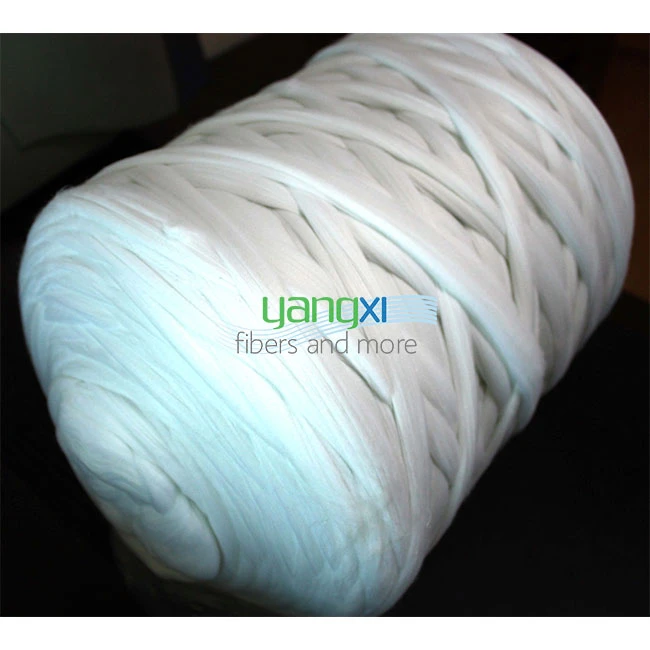

In the medical field, PLA is being explored for various applications. It can be used to print medical models for surgical planning, custom - made prosthetics, and even tissue engineering scaffolds. Since it's biodegradable, it has the potential to be used in implantable devices that will break down over time in the body.
Our PLA Fiber Offerings
As a PLA fiber supplier, I'm proud to offer high - quality PLA fiber that's suitable for 3D printing. We've worked hard to ensure that our fiber has consistent quality, so you can get reliable prints every time.
We also offer a variety of colors and thicknesses to meet your specific needs. Whether you're looking for a bright, eye - catching color for an art project or a more neutral tone for a functional part, we've got you covered.
If you're interested in other eco - friendly fibers, we also supply Bosilun Fiber, Low Melt Polyester Fiber, Flame Retardant Polyester Staple Fiber, Virgin Polyester Tops, and Bosilun Tops. These fibers have their own unique properties and applications, and they can be a great addition to your 3D printing projects.
Conclusion
So, can PLA fiber be used in 3D printing? The answer is a resounding yes! It has many advantages, such as being eco - friendly, having a low melting point, and providing a smooth finish. However, it also has some challenges, like brittleness and sensitivity to humidity.
If you're looking for a reliable and sustainable material for your 3D printing projects, give our PLA fiber a try. We're here to help you with any questions you might have and ensure that you get the best results. If you're interested in purchasing our PLA fiber or any of our other products, don't hesitate to reach out and start a procurement discussion. We're eager to work with you and help you bring your 3D printing ideas to life.
References
- Gibson, I., Rosen, D. W., & Stucker, B. (2010). Additive manufacturing technologies: rapid prototyping to direct digital manufacturing. Springer Science & Business Media.
- Le Duigou, A., Montagne, L., & Baley, C. (2014). Polylactic acid (PLA) composites: From production to properties. Composites Part A: Applied Science and Manufacturing, 63, 107 - 121.