

How does PSF perform in melt - blown non - wovens?
Jun 09, 2026
Hey there! I'm a supplier of PSF (Polyester Staple Fiber) for non - wovens, and today I want to chat about how PSF performs in melt - blown non - wovens.
Melt - blown non - wovens have become super important in a bunch of industries, from medical to filtration and even in the making of personal protective equipment (PPE). And PSF plays a crucial role in this process.
First off, let's talk about the basics of melt - blown non - wovens. It's a process where molten polymer is extruded through tiny nozzles and then blown by high - velocity air to form fine fibers. These fibers are then randomly laid down to create a web - like structure. Now, PSF can be a key ingredient in this process.
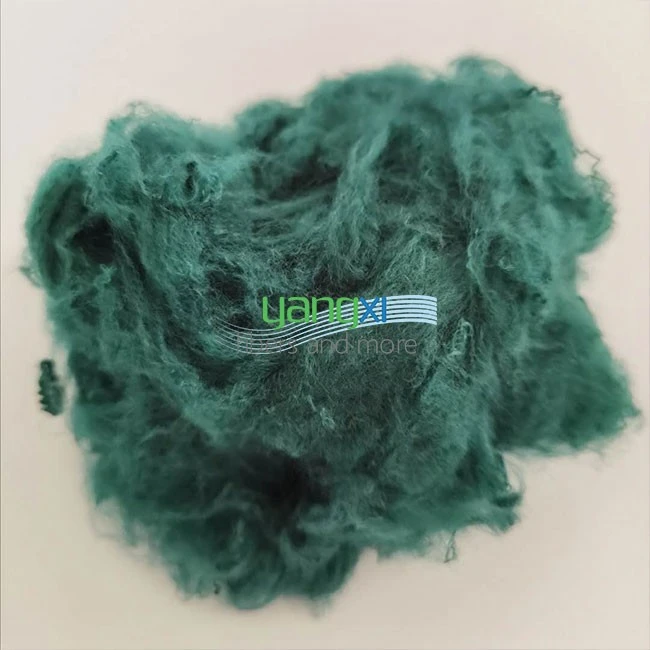
One of the big advantages of using PSF in melt - blown non - wovens is its versatility. We offer different types of PSF, like the Dope Dyed Color Polyester Staple Fiber. This type of PSF comes pre - colored, which means you don't have to go through the extra step of dyeing the non - woven fabric later. It saves time and resources, and also gives a more consistent color throughout the material.
The Sustainable Polyester Fiber is another great option. In today's world, sustainability is a huge deal. This PSF is made from recycled materials, which not only helps reduce waste but also has a lower environmental impact. When used in melt - blown non - wovens, it can still provide excellent performance. It has good strength and durability, which are important for applications like filtration where the material needs to withstand a certain amount of pressure.
Then there's the 3D Recycled Polyester Staple Fiber. This fiber has a unique three - dimensional structure. In melt - blown non - wovens, this 3D structure can create more space between the fibers. This is great for applications where air permeability is important, like in some types of face masks. The extra space allows air to flow more freely through the material, making it more comfortable to wear.
In terms of performance, PSF in melt - blown non - wovens offers good mechanical properties. It has a decent tensile strength, which means the non - woven fabric can hold up well under stress. This is crucial for products that need to be durable, like industrial wipes or geotextiles.
The thermal stability of PSF is also a plus. During the melt - blowing process, the polymer needs to be heated to a high temperature. PSF can withstand these high temperatures without degrading too much. This ensures that the final non - woven product has consistent quality.

Another aspect is the chemical resistance. PSF is resistant to many chemicals, which makes it suitable for use in environments where exposure to chemicals is common. For example, in the chemical industry, non - woven fabrics made with PSF can be used for protective clothing or filtration of chemical substances.
Now, let's talk about the challenges. One of the challenges in using PSF in melt - blown non - wovens is getting the right fiber diameter. The diameter of the fibers affects the properties of the non - woven fabric. If the fibers are too thick, the fabric may be less breathable. If they are too thin, the fabric may not have enough strength. As a supplier, we work hard to control the fiber diameter during the manufacturing process to ensure the best performance of the PSF in melt - blown non - wovens.
Another challenge is the compatibility with other additives. Sometimes, manufacturers may want to add other substances to the melt - blown non - wovens to enhance certain properties, like antibacterial agents or flame retardants. We need to make sure that the PSF is compatible with these additives so that they don't affect the performance of the non - woven fabric negatively.
Despite these challenges, the benefits of using PSF in melt - blown non - wovens far outweigh the difficulties. The versatility, performance, and sustainability of PSF make it a top choice for many manufacturers.
If you're in the market for PSF for your melt - blown non - woven production, I'd love to have a chat with you. We can discuss your specific needs and see how our PSF products can meet them. Whether you're looking for colored fibers, sustainable options, or fibers with a unique 3D structure, we've got you covered. Don't hesitate to reach out and start a conversation about your requirements.
References:
- Textile Research Journal, various issues on non - woven materials and fiber performance.
- Journal of Applied Polymer Science, articles related to melt - blown processes and polyester fibers.