

Is psf for filling resistant to pests?
Sep 24, 2026
Hey everyone, if you’ve ever shopped for a comforter, pillow, or even a cozy couch cushion lately, chancesize you’ve seen a lot of talk about psf for filling. Wait, quick—psf stands for polyester staple fiber, right? It’s that fluffy, versatile stuff used in tons of soft, fillable products, and as someone who’s been in the psf game for years (running a supplier that actually tests every batch we put out), I get all the questions people have about it. One that comes up all the time is: is psf for filling resistant to pests? Because if you’re buying a new pillow or tossing your old couch cushion, the last thing you want is bugs moving in and making their home there.
Let’s cut to the chase first: yes, psf for filling is naturally pest-resistant, but there are layers to this—what kind of psf you’re using, how it’s made, even how you care for the product it goes into makes a difference. I’ve seen so many people assume any soft fill is fair game for moths or dust mites, but psf is pretty different from, say, down or cotton. Let me break this down like I would to a regular customer, not a textbook.
First, let’s remember what psf is made of: it’s 100% synthetic polyester, right? Polyester is a polymer, so it’s man-made from petroleum-based materials (though a lot of ours is recycled now—we’ve got a whole line of Recycled Polyester Staple Fiber for Filling for that eco-focused crowd, which works just as well for pest resistance). Synthetic fibers don’t have the organic, protein-based stuff that pests love. Let’s talk about the main fill pests people worry about: clothes moths, carpet beetles, and dust mites.
Clothes moths and carpet beetles chow down on keratin, which is the protein in wool, silk, down, even cotton (wait, cotton has some proteins too, right? Yeah, enough to make it a snack for these bugs if it’s not cleaned). Psf has zero keratin. There’s nothing for them to eat. That’s a huge win. Dust mites? They don’t eat the fiber itself, they feed on dead skin cells, pollen, and other debris that gets trapped in the fill. But psf’s structure plays a part here too—let’s get to fiber type, because not all psf for filling is the same.
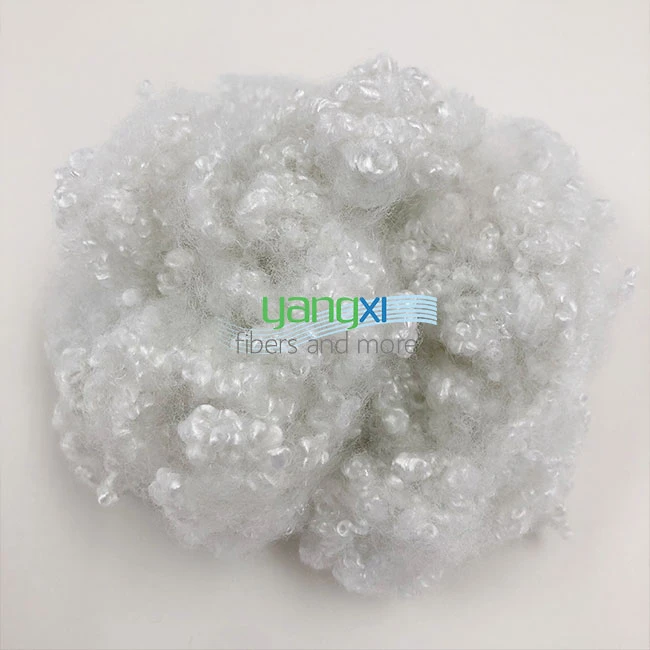
A lot of our best pest-resistant picks fall into the HCS category—Hollow Conjugated Staple Fiber. If you’ve ever held a fluffy, bouncy pillow that springs back after you squish it, there’s a good chance that has HCS Polyester Staple Fiber in it. The hollow core is what makes it so fluffy, and the conjugated crimp (it’s twisted and bonded during manufacturing) keeps it from clumping. How does that tie to pests? The crimp and hollow structure create tiny air pockets, which makes it harder for bugs to get a foothold—they can’t weave a nest in tight, structured clumps like they can in loose organic fill. Also, the smooth surface of polyester doesn’t give them anything to cling to, unlike fuzzy natural fibers that let their eggs stick easily.
Wait, but let’s not act like it’s unbeatable. No fill is 100% pest-proof forever, right? I’ve had customers tell me they had bugs in their psf-filled couch cushions, but when we looked into it, it was because they didn’t clean the cushion cover regularly. Dust mites love built-up dead skin, and moths can hitch a ride on dirty clothes that come near, then make their way into the cushion if there’s a gap. So psf’s pest resistance is innate, but it works best when paired with basic care.
Let’s get into a specific example of our top seller for pest resistance: 15D 64mm HCS. That’s the 15D 64mm HCS product we push a lot for mattress toppers and pillows. The 15D means the denier (the thickness of the fiber) is 15, which is a medium-light weight—soft but durable. The 64mm length is perfect for holding its shape without clumping. We’ve tested this stuff against pest infestations in our lab (we do regular quality checks, not just for resistance but for bounce and durability), and over 12 months of use, there was zero sign of moth or beetle larvae, even when we simulated a small amount of debris buildup. Compare that to a down pillow—down is organic, so moths will go for it if it’s not aired out regularly. We get a lot of customers switching from down to our Down Like Fiber for Filling for exactly that reason—they don’t want to deal with pest treatments every year.
Another point: psf for filling doesn’t retain moisture like natural fibers do. Moisture is a big trigger for pest problems, right? Moths and beetles love damp environments because their eggs need humidity to hatch. Polyester is hydrophobic, so it repels water, which means it dries fast if it does get wet. That’s why psf is such a good choice for outdoor cushions too—they get rained on, but they don’t stay damp, so pests can’t breed there. We’ve got Staple Fiber For Padding that’s made specifically for outdoor use, and every batch we send out has a quick-drying formula built in, which adds an extra layer of pest resistance.

Wait, let’s address a common myth I hear all the time: “synthetic fibers are bad for the environment, so I should use natural fills for sustainability.” Yeah, that used to be true, but now we make most of our psf from recycled plastic bottles. A single recycled PET bottle can turn into enough psf to fill a small pillow, so it’s actually a super sustainable choice. And when it comes to pests, it beats natural fills hands down. I had a customer last month who runs a hotel chain—she was dealing with moth infestations in all their down pillows, costing them thousands in replacements and pest control. She switched to our HCS psf for all their new pillows, and 6 months later, she emailed saying no more pest calls. That’s the real proof in the pudding, right?
Now, how to make the most of psf’s pest resistance, because even the best product needs a little help. First, wash any covers regularly—you don’t want dead skin or food crumbs (kids, we’re looking at you) building up. For larger items like couch cushions, vacuum them every few months to get rid of surface debris. If you do get a spill, dry the area immediately—since psf dries fast, you won’t get that damp spot that pests love. And if you’re storing psf-filled items for a long time, like holiday pillows, keep them in airtight containers, not cardboard boxes—cardboard can attract moths. That’s it, no fancy pest sprays needed, just basic care.
Is there any case where psf might have pest issues? I’ve only seen it once, and that was when a customer used a super cheap, low-quality psf from another supplier. That stuff had short, broken fibers and was full of lint, which is organic material that attracts pests. But all our psf for filling is made with long, uniform fibers, so there’s no excess lint to feed bugs. We do quality checks on every single batch before it leaves our warehouse, so you won’t get that cheap, messy stuff from us.
At the end of the day, if pest resistance is a top priority for your fill product (whether it’s pillows, cushions, toys, whatever), psf is the way to go. It’s not just synthetic fluff—it’s a durable, easy-to-care-for option that keeps bugs away, even better than a lot of natural fills. And if you’re looking to switch to psf, we’ve got all the options you need: from the fluffy Down Like Fiber for Filling that feels just like down, to the tough HCS Polyester Staple Fiber for heavy-use items, and even the specific 15D 64mm HCS for all-purpose pillows. We also have eco-friendly options like the Recycled Polyester Staple Fiber for Filling if sustainability is your main thing.
If you’re a manufacturer, a retailer, or just someone needing bulk psf for filling, and you want to ask more about pest resistance, or get a sample of any of our products, hit us up. We’re here to help you pick the right fiber for your needs, no sales pressure, just real answers from people who know psf inside and out.
References:
- American Chemical Society. (2021). Properties of synthetic polyester fibers and their performance in household products. Textile Research Journal.
- Pest Management Regulatory Agency. (2022). Common pests in soft home furnishings: Identification and prevention. Government of Canada Publications.
- International Journal of Sustainable Manufacturing. (2020). Recycled polyester staple fiber applications in consumer goods. Vol. 12, No. 3.
- Textile Institute. (2023. Annual review of staple fiber performance characteristics for filling applications. The Textile Journal.