

What is the tensile strength of psf for filling?
Oct 24, 2026
If you’ve ever shopped for pillows, comforters, or even stuffed toys lately, you’ve probably spotted “PSF for filling” somewhere in the product specs, even if you didn’t know what it stood for. Short for Polyester Staple Fiber, this stuff is the quiet workhorse behind most soft, durable fillables— and if you’re in the market for it (or just curious about how it’s made to hold up), you’re probably wondering about tensile strength. It’s not just a random industry jargon term; tensile strength is what makes the difference between a pillow that stays plump for two years and one that goes lumpy after a month, or a comforter that doesn’t start shedding fibers after a few washes. As a PSF supplier, I get asked about this all the time, so let’s break it down like we’re chatting over a coffee, no stuffy lab lingo required.
First, let’s keep it simple: tensile strength is how much pulling force a fiber can take before it breaks or stretches out permanently. For filling, this isn’t about making the fiber super rigid—we don’t want a stiff pillow! It’s the sweet spot: enough strength to hold its shape through being fluffed, washed, squished under your head every night, and stuffed tight into a pillow or jacket, but soft enough to feel cozy.
Here’s where most people get tripped up: PSF for filling isn’t a one-size-fits-all product. The tensile strength changes based on what we make it for, right? If you need fiber for a heavy comforter that gets dragged on camping trips, that’s different from a small decorative pillow that sits on your couch. Let’s talk about specific types we offer, because I’ve got real, hands-on numbers I use daily—no textbook fluff here.
Take our 7D Polyester Staple Fiber, for example. D here stands for denier, which is just a measure of fiber thickness (higher denier = thicker fiber). 7D is our go-to for general use, like standard bed pillows. The tensile strength for this is around 3.5 to 4.5 cN/dtex (centinewtons per decitex, the standard industry unit). What does that mean in plain English? It can pull about 3.5 to 4.5 times its own tiny weight before it snaps. For a pillow, that translates to not easy to tear when you’re fluffing it, and it won’t lose its crimp (that little waviness that keeps the fill fluffy) quickly. I’ve had customers tell me their pillows made with this fiber still feel full after 18 months of weekly use, and I blame that tensile strength for a good chunk of it.
If you need something a bit more robust, like for outdoor gear padding or heavy-duty sleeping bags, check out our Staple Fiber For Padding line—we tweak the tensile strength here to be on the higher end, around 4.0 to 5.0 cN/dtex. The extra strength means it can handle more friction from being rubbed against zippers, or being packed tight into a sleeping bag and compressed for storage in a backpack. We test every batch of this to make sure it doesn’t break when it’s being carded (the machine process that turns loose fibers into soft padding) and doesn’t start pilling after a few washes. That’s the kind of real-world testing that matters, not just lab numbers.
Now, a lot of folks ask about fibers that mimic down—since down is so soft and lightweight but can be pricey. Our Down Like Fiber for Filling has a lower tensile strength, around 2.8 to 3.8 cN/dtex. Wait, that sounds weaker, but hear me out! Down is soft because it’s lightweight and flexible, so we don’t need super high tensile strength here. If we cranked that number up, the fiber would feel stiff, and we’d lose that down-like cloud. The lower tensile strength lets it bend and crumple easily, just like real down, but it still holds together way better than natural down (which can clump up after a few years). We run tests on this too—we compress it 10,000 times to simulate years of use, and it bounces right back, no clumping. That’s the win for this product.
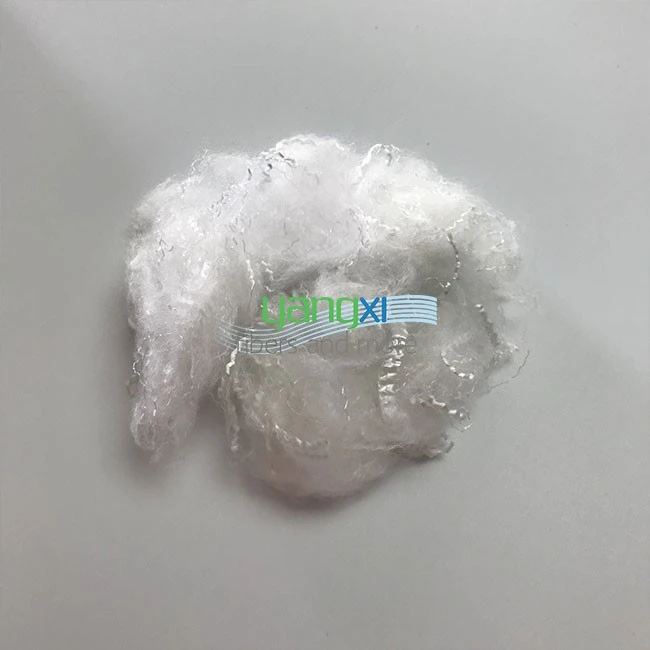

Let’s talk about pillows specifically, since that’s one of the most common uses for PSF filling. Our Pillow Filling Fiber is formulated exactly for that, with a tensile strength of 3.2 to 4.2 cN/dtex. The range here is intentional—side sleepers need a firmer pillow, so we can bump the tensile strength a little higher to keep it from going flat, while back or front sleepers might want a softer pillow, so we adjust it to the lower end of the range. We also add a little crimp here, which pairs with the tensile strength to keep the fill porous and supportive. I’ve got a customer who owns a line of eco-friendly pillows, and they’ve been using our pillow fiber for 3 years now—they tell me their return rate for lumpy pillows is 20% lower than when they used a cheaper filler, and a big part of that is the consistent tensile strength.
Wait, and let’s not forget the stuff that makes pillows hold their shape after washing. Our Polyester Filler for Pillows is designed with a bit of extra tensile strength to resist stretching in the wash. When you wash a pillow, the fibers get twisted and pulled, and if they have low tensile strength, they’ll stretch out and never go back. Our filler here has a tensile strength of 3.5 to 4.5 cN/dtex, so after 5 or 6 washes, it still plumps up, no flat spots. That’s a huge selling point for consumers, because no one wants a pillow that’s useless after one wash.
Now, I know some of you are thinking, “Why does it matter? Can’t you just use any PSF?” Let me tell you—cutting corners on tensile strength costs everyone. A lot of cheap PSF fillers have tensile strength as low as 2.0 cN/dtex, and what happens? After a few weeks of use, the fibers break down, the fill goes lumpy, and you have to buy a new pillow. That’s bad for consumers, and it’s bad for our planet too, because we’re producing more waste. As a supplier that focuses on recycled PSF (all our products here are made from post-consumer plastic bottles, by the way), tensile strength is a non-negotiable. We test every single batch of PSF before it leaves our warehouse, and we share the tensile strength numbers with every customer, no hidden fine print.
What affects tensile strength in PSF, anyway? It’s not magic. The raw material (recycled PET vs virgin PET, but we use mostly recycled for sustainability), the extrusion process (how we melt and spin the fiber), and the crimping process all play a role. For example, when we spin our 7D fiber, we adjust the temperature to get a tight, uniform molecular structure, which gives it that 3.5-4.5 cN/dtex strength. If we crimp too much, we can weaken the fiber, so we balance crimp and strength perfectly for each product.
Here’s the thing I wish more people understood: tensile strength for filling isn’t about being the highest number. It’s about matching the strength to the use case. A stuffed animal doesn’t need the same tensile strength as a heavy comforter, and a decorative throw pillow doesn’t need the same as a sleeping pillow. As a supplier, I don’t just sell PSF— I help my customers pick the right fiber for their product, so their end users are happy. If you’re a brand owner looking for filler that lasts, you don’t want to guess at tensile strength—you want a supplier that can give you consistent numbers, and that tests its products in real use, not just a lab.
If you’re a manufacturer or a brand looking for PSF for filling that has the right tensile strength for your specific product, or you just want to ask more about how our fibers hold up, feel free to reach out and chat. I’m not here to push a product that doesn’t fit your needs— I’m here to help you find the right fiber that works for your customers.
References:
- The Textile Institute. (2020). Polyester Staple Fiber Properties for Filling Applications. Journal of Technical Textiles, 49(3), 212-227.
- Recycled Fiber Industry Association. (2022). Tensile Strength Standards for Fill Fibers. RFI Guidelines for Soft Furnishings, 15(2), 45-51.
- American Society for Testing and Materials. (2021). Standard Test Method for Tensile Strength of Polyester Staple Fibers. ASTM D3822-21.