

What is the weight of Bosilun Fiber?
Jun 22, 2026
As a supplier of Bosilun Fiber, I am often asked about the weight of Bosilun Fiber and its implications in various applications. In this blog, I will delve into the concept of the weight of Bosilun Fiber, its significance, and how it relates to different types of fibers we offer, such as Virgin Polyester Tops, Low Melt Polyester Fiber, and Flame Retardant Polyester Staple Fiber.

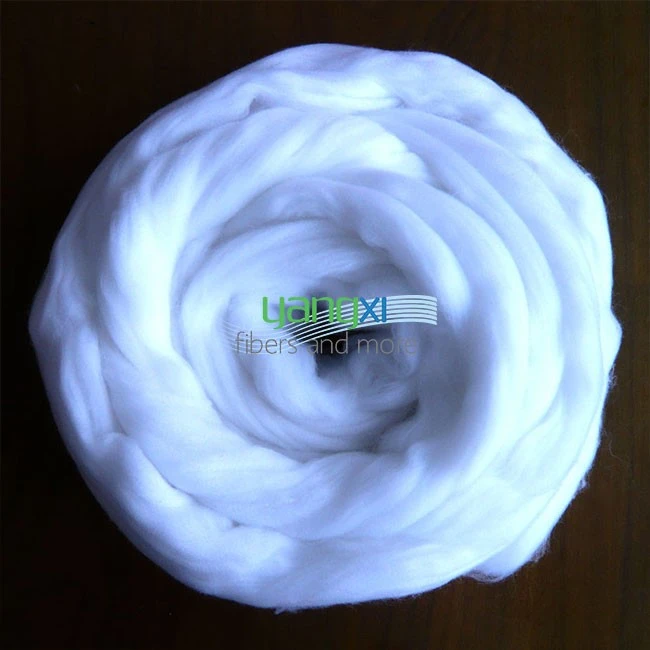
Understanding the Weight of Fiber
The weight of fiber is a crucial parameter that determines its performance, functionality, and suitability for different applications. In the textile industry, fiber weight is typically measured in denier or tex. Denier is defined as the weight in grams of 9,000 meters of fiber, while tex is the weight in grams of 1,000 meters of fiber. A lower denier or tex value indicates a finer and lighter fiber, while a higher value represents a coarser and heavier fiber.
The weight of Bosilun Fiber can vary depending on its type, manufacturing process, and intended use. For example, our Virgin Polyester Tops are available in a range of deniers, from fine to coarse, to meet the diverse needs of our customers. Fine denier fibers are often used in applications where softness, smoothness, and drape are desired, such as in high-end apparel and lingerie. Coarse denier fibers, on the other hand, are more suitable for applications that require strength, durability, and bulk, such as in industrial textiles and non-woven fabrics.
Significance of Fiber Weight
The weight of Bosilun Fiber plays a significant role in determining its physical and mechanical properties. A lighter fiber generally has a softer hand feel, better breathability, and greater flexibility, making it ideal for applications where comfort is a priority. In contrast, a heavier fiber offers more strength, stability, and insulation, making it suitable for applications that require durability and performance.
In addition to its physical properties, the weight of fiber also affects its processing and manufacturing. Lighter fibers are easier to spin, weave, and knit, and they require less energy and resources during production. Heavier fibers, on the other hand, may require more specialized equipment and processes to handle and process, but they can offer greater versatility and performance in certain applications.
Applications of Bosilun Fiber
Bosilun Fiber is a versatile material that can be used in a wide range of applications, including apparel, home textiles, industrial textiles, and non-woven fabrics. The weight of the fiber is an important consideration when selecting the appropriate type of fiber for a specific application.
Apparel
In the apparel industry, the weight of Bosilun Fiber can have a significant impact on the comfort, style, and performance of the garment. Fine denier fibers are often used in lightweight and breathable fabrics, such as summer dresses, shirts, and activewear. These fibers provide a soft and smooth feel against the skin, and they allow air to circulate, keeping the wearer cool and comfortable. Coarse denier fibers, on the other hand, are used in heavier and more durable fabrics, such as winter coats, jackets, and jeans. These fibers provide warmth, insulation, and protection from the elements.
Home Textiles
In the home textiles industry, the weight of Bosilun Fiber can affect the appearance, feel, and functionality of the product. Fine denier fibers are often used in bedding, curtains, and upholstery to provide a soft and luxurious feel. These fibers can also enhance the drape and flow of the fabric, adding a touch of elegance to the home decor. Coarse denier fibers, on the other hand, are used in carpets, rugs, and outdoor furniture to provide durability, strength, and resistance to wear and tear.
Industrial Textiles
In the industrial textiles industry, the weight of Bosilun Fiber is critical for ensuring the performance and reliability of the product. Coarse denier fibers are often used in applications such as automotive interiors, geotextiles, and filtration media. These fibers provide high strength, stiffness, and resistance to abrasion, making them suitable for demanding industrial environments. Fine denier fibers, on the other hand, are used in applications such as medical textiles, protective clothing, and aerospace composites. These fibers provide high performance, comfort, and functionality, making them ideal for specialized applications.
Non-Woven Fabrics
In the non-woven fabrics industry, the weight of Bosilun Fiber can affect the properties and performance of the fabric. Fine denier fibers are often used in non-woven fabrics for applications such as wipes, feminine hygiene products, and medical dressings. These fibers provide a soft and gentle touch, as well as good absorbency and liquid retention. Coarse denier fibers, on the other hand, are used in non-woven fabrics for applications such as insulation, filtration, and packaging. These fibers provide high strength, stiffness, and durability, making them suitable for heavy-duty applications.
Factors Affecting the Weight of Bosilun Fiber
The weight of Bosilun Fiber can be affected by several factors, including the raw material, manufacturing process, and post-treatment.
Raw Material
The type and quality of the raw material used to produce Bosilun Fiber can have a significant impact on its weight. Different types of polymers, such as polyester, nylon, and polypropylene, have different densities and molecular structures, which can affect the weight of the fiber. In addition, the purity and quality of the raw material can also affect the weight of the fiber. For example, a high-quality polyester fiber may have a lower denier or tex value than a lower-quality fiber, even if they are made from the same polymer.
Manufacturing Process
The manufacturing process used to produce Bosilun Fiber can also affect its weight. Different manufacturing processes, such as melt spinning, wet spinning, and dry spinning, can produce fibers with different weights and properties. For example, melt spinning is a common method used to produce polyester fibers, and it can produce fibers with a wide range of deniers and tex values. The spinning speed, temperature, and pressure can also affect the weight of the fiber.
Post-Treatment
The post-treatment of Bosilun Fiber can also affect its weight. Post-treatment processes, such as dyeing, finishing, and coating, can add weight to the fiber. For example, a fiber that has been dyed with a heavy pigment or coated with a thick layer of resin may have a higher weight than an untreated fiber. In addition, the post-treatment process can also affect the physical and mechanical properties of the fiber, such as its strength, stiffness, and abrasion resistance.
Conclusion
In conclusion, the weight of Bosilun Fiber is a critical parameter that determines its performance, functionality, and suitability for different applications. As a supplier of Bosilun Fiber, we offer a wide range of fibers with different weights and properties to meet the diverse needs of our customers. Whether you are looking for a fine denier fiber for a soft and comfortable garment or a coarse denier fiber for a durable and high-performance application, we have the right fiber for you.
If you are interested in learning more about our Bosilun Fiber products or would like to discuss your specific requirements, please do not hesitate to contact us. We look forward to working with you to find the best fiber solution for your needs.
References
- Textile Institute. (2019). Textile Terms and Definitions. 11th Edition.
- ASTM International. (2020). Standard Terminology for Textiles. ASTM D123-20.
- ISO. (2018). Textiles - Quantitative Chemical Analysis. ISO 1833-1:2018.