
Down Jacket vs. Hardshell: Which Offers Superior Warmth?
Dec 19, 2025
As winter approaches, a common question arises: "Which is warmer, a down jacket or a hardshell (technical jacket)?" The answer lies in the fabric structure and the core design logic of the materials. Each has distinct advantages depending on the environment. Below is a breakdown of the warming principles and applicable scenarios from a textile perspective.
I. Down Jackets: The Mastery of "Static Air" Insulation
The warmth of a down jacket depends on the ability of the filling and fabric to lock in temperature.
- Insulation Principle: Down creates a layer of "static air." Since air has low thermal conductivity, a thicker and loftier layer of static air leads to better heat retention. High-quality down apparel uses white goose or duck down with high fill power (usually 600FP+).
- Fabric Composition: The outer shell is typically made of high-density nylon or polyester to remain lightweight yet windproof. Premium versions often feature specialized anti-leakage treatments or graphene-enhanced coatings to minimize down migration and improve thermal efficiency.
- The Limitation: Down is highly sensitive to moisture. Once the fabric gets wet, the down clusters clump together, destroying the static air layer and causing the warmth to drop significantly.
II. Hardshells: The Shield of Composite Protection
A hardshell's strength lies in its ability to block external elements through a composite fabric structure.
- Insulation Principle: It relies on a "Windproof/Waterproof Membrane + Insulation Layer" system. The outer layer is usually a high-tenacity, abrasion-resistant nylon, while the middle layer is a breathable, waterproof membrane.
- Fabric Composition: The warmth comes from the inner layer, often a polyester fleece or a detachable down liner. The windproof nature of the fabric is the key to warmth; it prevents the "wind-chill effect" by stopping cold air from penetrating and stripping away body heat.
- The Limitation: A single-layer hardshell (without an insulation liner) provides less thermal retention than a down jacket of the same weight because it lacks a thick static air layer.
III. Comparison Table: Scenario Suitability
| Feature | Down Jacket | Hardshell (with Liner) |
| Core Material | High-density Nylon/Polyester + Down | High-tenacity Composite + Fleece/Down |
| Warming Logic | Maximizing static air layer | Blocking wind/moisture + Insulation |
| Best Environment | Dry, extreme cold (e.g., Northern Winters) | Windy, snowy, or wet (e.g., Skiing, Hiking) |
| Moisture Resistance | Poor (clumps when wet) | Excellent (waterproof exterior) |
IV. Strategic Sourcing: The Fibers Behind the Performance
Whether manufacturing for urban warmth or outdoor protection, the quality of the finished garment starts with the fiber foundation. At Jiangyin Yangxi International Trade, we provide the essential raw materials for both categories:
- For Down Apparel: We supply high-tenacity nylon and polyester filaments specifically designed for high-density weaving. These fibers provide the stable, lightweight shell needed to contain high-fill-power down and prevent leakage.
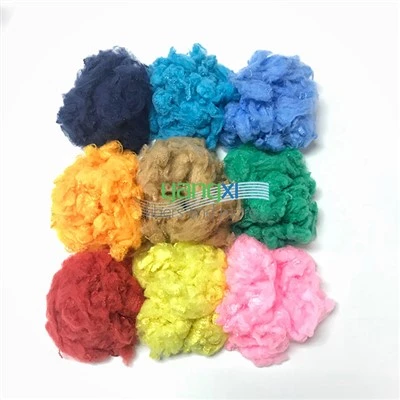
- For Hardshells & Liners: We offer polyester staple fibers optimized for the production of high-density fleece and composite linings. These fibers are engineered to maintain loft and thermal stability, ensuring the "insulation layer" of a hardshell remains effective even after repeated use.
- Sustainable Integration: For brands targeting the eco-friendly market, Yangxi International provides Recycled Polyester (RPET) fibers that meet the technical requirements for both outer shells and inner linings.
In summary, there is no absolute "warmer" option-only the right fabric for the right environment. Jiangyin Yangxi International Trade supports manufacturers in delivering both peak insulation and rugged protection through our diverse fiber solutions.