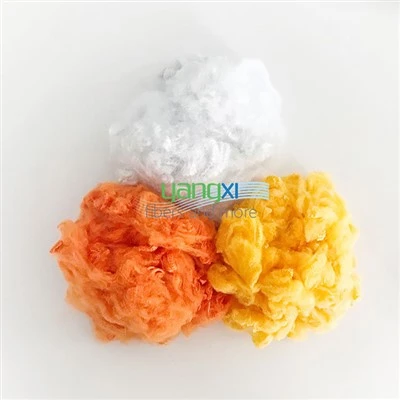

Low-melting-point polyester fiber: an innovative breakthrough in the textile industry
Dec 10, 2019
In recent years, low-melting-point polyester fiber has rapidly emerged in the fields of textiles, clothing and nonwovens with its unique performance advantages, and has become an important material to promote the technological upgrading of the industry.This new type of fiber is made by modified polyester technology, and its melting point is significantly lower than that of traditional polyester fibers, which makes it show great potential in thermal bonding and lightweight design.
The core advantage of low-melting-point polyester fiber lies in its thermoplastic properties. Unlike traditional polyester fibers that rely on chemical adhesives or high-temperature and high-pressure processes, this fiber can melt at a lower temperature and achieve rapid bonding with other materials. This feature makes it widely used in hot air non-woven fabrics, automotive interiors, filter materials and other fields, which not only simplifies the production process, but also reduces energy consumption and environmental pollution. In addition, its soft feel and good resilience also make it an ideal choice for high-end clothing and home textile products.
With the increasingly prominent environmental protection trend today, the sustainable advantages of low-melting-point polyester fiber are further highlighted. Due to the reduction in the use of chemical adhesives, its production process is cleaner, and its strong recyclability also meets the requirements of the circular economy. Many downstream companies have used it as a key material to replace traditional chemical fibers to enhance the environmental competitiveness of their products.
Market research shows that the global demand for low-melting polyester fibers is growing at a double-digit rate each year. With the continuous advancement of technology, its application in emerging fields such as smart textiles and medical supplies is also continuing to expand. In the future, with the optimization of production processes and further reduction of costs, this innovative fiber is expected to become one of the mainstream choices in the textile industry.
For foreign trade practitioners, the rise of low-melting polyester fibers not only brings new business opportunities, but also requires companies to pay close attention to its technological dynamics and market trends to grasp the pulse of industry development.