
Premium Shirt Fabrics Demystified: Material Selection, Structural Profiles, and Sourcing Strategies
May 29, 2026
The baseline character of an executive wardrobe is fundamentally dictated by its raw material composition. While precise tailoring and advanced construction techniques are critical, the choice of textile remains the definitive factor governing a garment's aesthetic prestige, breathability, and structural longevity. For international apparel brands and corporate uniform suppliers, identifying the technical specifications of premium shirt fabrics is essential to satisfy sophisticated consumer demands across business, leisure, and cross-seasonal wear. High-tier shirting criteria require a natural texture, excellent skin-friendly breathability, fluid drape, and high laundering resistance. These premium substrates are generally classified into advanced natural fibers and high-performance blended fabrics.
The Four Core Premium Shirting Materials
Modern luxury and professional shirt manufacturing relies on four primary material classifications, each delivering specific performance benefits for diverse environments:
- High-Count Cotton Fabrics: Positioned as the foundational standard for professional executive attire, pure cotton provides exceptional moisture absorption and natural softness. While standard garments utilize coarse 40-60 count threads, premium shirting incorporates finer yarns starting at 80S, with flagship qualities reaching 120S to 180S. Finer yarn structures yield a tighter, more dense weave that exhibits a delicate natural luster and a fluid, silk-like hand-feel. Top-tier varieties, such as Egyptian long-staple cotton and American Pima cotton, feature physical fiber lengths exceeding 38mm, producing finished fabrics that resist structural distortion during prolonged wear. The single limitation of pure high-count cotton is its susceptibility to creasing, which requires regular pressing.
- Premium Linen Fabrics: Renowned as a premium hot-weather selection, linen is a highly breathable vegetable fiber offering exceptional heat dissipation and rapid moisture transport. High-grade linen options undergo specialized processing to eliminate the coarse texture associated with standard bast fibers, yielding a supple, soft skin contact that softens further over extended use. The organic creasing pattern of linen delivers a relaxed aesthetic suitable for luxury resort wear and casual social environments.
- Luxury Pure Silk Fabrics: Representing the pinnacle of natural luxury fibers, pure mulberry silk provides an elegant natural luster, a smooth hand-feel, and an unmatched fluid drape. Silk shirts adjust well to body contours, making them popular for high-profile business dinners and formal evening events. However, pure silk carries a high cost basis and requires dedicated hand-wash maintenance protocols to protect its delicate filaments from friction damage.
- Advanced Blended Fabrics: To resolve the maintenance challenges and structural fragility of unblended natural fibers, modern spinning mills utilize precision-engineered fiber blends to combine organic comfort with industrial durability. Popular combinations include cotton-linen matrices (blending organic softness with rapid cooling), cotton-silk composites (fusing cotton comfort with silk luster), and cotton-polyester configurations (minimizing deformation and maximizing wrinkle recovery). These advanced composites deliver excellent commercial value for busy professionals, providing a resilient, easy-care fabric that retains a high-end appearance throughout extended travel and workdays.
Beyond fiber content, the specific weave construction alters the technical utility of the fabric. High-density poplin weaves offer a crisp, uniform texture optimized for formal corporate suiting; oxford weaves feature a more pronounced, textured grain ideal for casual or smart-business applications; and intricate jacquard motifs deliver unique, complex visual architectures that emphasize premium product positioning.
Material Evolution: Engineering Performance and Compliance into Modern Shirting
To meet expanding global regulatory mandates and align with consumer preferences for circular product life cycles, forward-looking textile mills are upgrading their blending matrices at the raw material stage.
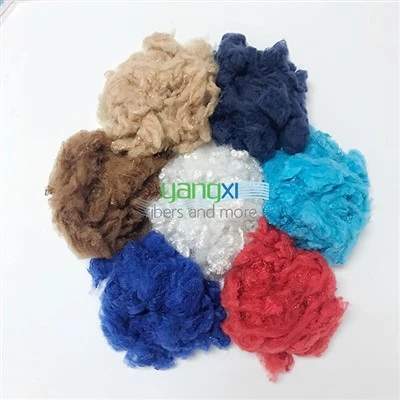
Integrating premium Recycled Polyester Staple Fiber into cotton or linen blends allows weavers to significantly improve the wrinkle resistance and tensile strength of lightweight shirts while utilizing verified, post-consumer circular material streams. For brands developing premium collections targeted at eco-conscious commercial markets, combining these natural components with the advanced CiCLO® biodegradable series or bio-based PLA fiber groupings offers a practical framework aimed at mitigating the persistence of synthetic microfibers in global ecosystems. Simultaneously, utilizing certified OEKO-TEX certified traceable fibers ensures that export-oriented garment manufacturers can verify total chemical safety and raw material transparency directly to corporate retail compliance auditors.
For specialized industrial apparel, aviation uniforms, and hospitality service garments requiring advanced protective ratings, these shirting bases can be augmented with functional traits. Incorporating specialized Flame Retardant chemical structures, utilizing precision Low Melt bonding fiber configurations, or blending in versatile Bosilun fibers allows manufacturers to achieve critical safety ratings and superior color fastness without adding unnecessary fabric weight or reducing air permeability. Deploying these innovative environmental fibers allows manufacturing mills to elevate the technical complexity of their lines and better support their underlying operating margins. This strategic, multi-fiber approach to textile sourcing is designed to help progressive enterprises adapt to changing market conditions, blending timeless stylistic character with modern durability and reinforcing long-term supply chain resilience.