
Space Cotton vs. Polyester: Ingredient or Finished Product?
Jan 29, 2026
In the quest for high-performance winter textiles, the term "Space Cotton" often appears. Is it a futuristic fiber or just another marketing name for Polyester? To understand the 2026 market, we must look beyond the name to the structural engineering behind the fabric.
The Core Logic: The "Flour and Bread" Analogy
To clarify the confusion: Polyester is a raw synthetic fiber, while Space Cotton is a complex, composite material engineered from polyester.
- Think of polyester as the "flour" (the base ingredient).
- Think of Space Cotton as the "bread" (the processed final product).
You wouldn't say "bread is just flour," but you can't have bread without it. Space Cotton takes standard polyester and transforms it through specialized structural processing.
Why Does It Perform Better? (The 3D Secret)
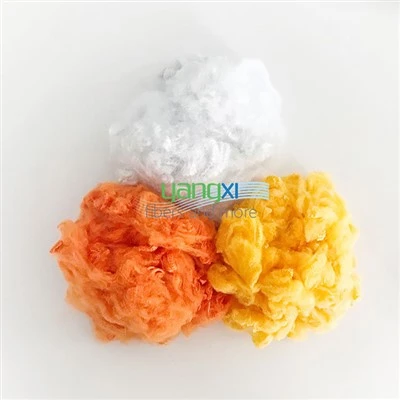
While standard polyester is often woven in flat structures, Space Cotton utilizes Three-Dimensional Crimped Fibers and a Hollow Core Construction. By using needle-punching or specialized bonding techniques, it creates a "honeycomb" structure that traps massive amounts of air.
This results in three decisive advantages:
- Ultra-Lightweight: The hollow fibers reduce density, providing warmth without the bulk.
- Superior Thermal Locking: The trapped air acts as a natural thermal barrier, significantly outperforming standard flat-woven polyester.
- High Resilience: Its 3D structure allows it to spring back instantly after compression, making it ideal for products that need to maintain their loft over time.
Quick Identification Guide: Avoiding the "Marketing Trap"
Because of its popularity, many standard polyester fabrics are mislabeled as "Space Cotton." Here is how to verify:
| Verification | Space Cotton (Authentic) | Standard Polyester (Basic) |
| Fiber Label | Marked as "Space Cotton" (Core: Polyester) with 3D tech notes. | Simply marked as "100% Polyester." |
| The Touch Test | Fluffy, highly elastic, and bounces back immediately. | Often stiffer or lacks significant loft; flattens under pressure. |
| Application | Thermal base layers, pillow cores, lightweight padded liners. | Universal use-from shirts and curtains to standard jackets. |