
Technical Analysis of Shape-Retention Textiles: Differentiating Non-Iron (Durable Press) and Wrinkle-Resistant Fabrics
Jul 09, 2026
In the international apparel sector and corporate procurement ecosystems, shape retention is a primary driver of consumer satisfaction. However, a widespread point of confusion within the Global Textile Supply Chain is the technical distinction between "wrinkle-resistant" and "non-iron" (durable press) fabrics.
While sourcing teams often treat these terms as interchangeable, they represent vastly different engineering standards, chemical processes, and performance thresholds. Choosing the incorrect finishing category can lead to garments that warp, lose their shape, or require intensive ironing after only a few wash cycles. Understanding these mechanics is essential for executing precise Global Sourcing Strategies and ensuring high product performance.
Technical Standards and Definitions
The separation between these two finishing tiers is defined by clear engineering guidelines and performance criteria:
- Wrinkle-Resistant Fabrics: This represents an entry-level textile treatment designed to reduce minor creasing caused by daily wear. It lacks strict durability testing standards. After machine washing, wrinkle-resistant textiles frequently display noticeable creasing and structural relaxation, requiring post-wash ironing to restore a crisp appearance.
- Non-Iron (Durable Press) Fabrics: This is an advanced, higher-tier process that incorporates anti-shrinkage, anti-wrinkle, and durable-press parameters. Certified non-iron fabrics must survive a minimum of 5 consecutive industrial wash-and-dry cycles while maintaining flat surface smoothness, dimensional stability, and sharp, visible creases without requiring any secondary thermal pressing.
Chemical Engineering and Manufacturing Processing
The differences in performance are a direct result of how the fabrics are treated at the molecular level during manufacturing:
1. Wrinkle-Resistant Mechanisms: Superficial Coatings
Basic wrinkle resistance is typically achieved through an inexpensive surface application method. A temporary anti-wrinkle chemical agent is sprayed onto the face of the fabric, forming a superficial setting film.
While cost-effective and easy to execute, this topical layer has poor wash fastness. It degrades significantly after only 1 to 3 laundering cycles, causing the fabric to lose its wrinkle resistance, stiffen, and become less breathable. Certain natural fibers, such as high-twist cotton or fine wool wools, achieve a similar entry-level resistance through natural fiber elasticity, but their long-term durability remains limited.
2. Non-Iron Mechanisms: Deep Macromolecular Cross-Linking
True non-iron performance requires changing the internal structure of the fiber. Woven fabrics undergo high-temperature resin curing, which forms stable cross-linked chemical bonds between individual polymer chains to lock the material in a flat position.
For high-end shirts and uniforms, factories utilize garment durable press (DP) processing. Once the garment is completely sewn, it is placed into three-dimensional molds for comprehensive thermal curing. This method locks critical stress points-such as collars, seams, pockets, and hems-into shape, allowing the garment to survive over 200 commercial wash cycles while remaining perfectly smooth.
Laundering, Maintenance, and Consumer Performance Profiles
| Functional Vector | Wrinkle-Resistant Fabrics | Non-Iron (Durable Press) Fabrics | Sourcing Procurement Impact |
| Mechanical Action | Resists light daily pressure; wrinkles during long storage. | Resists heavy compression, crushing, and tight folding. | Ideal for high-frequency business travel and commuting lines. |
| Post-Wash Maintenance | Requires systematic steam pressing or ironing. | Zero ironing required; ready to wear immediately after drying. | Optimizes ease-of-care ratings for commercial apparel. |
| Laundering Lifespan | Temporary performance; diminishes within 1 to 3 washes. | Long-term performance; retains shape for over 200 washes. | Increases total garment service life and product value. |
| Tactile Profile | Retains a natural, soft, and skin-friendly hand-feel. | Slightly firmer hand-feel; initial breathability is reduced. | Requires careful selection based on target climate markets. |
Material Optimization: Ensuring Tensile Integrity and Supply Chain Resilience
Subjecting base yarns to aggressive chemical treatments like high-temperature resin cross-linking reduces the natural tear strength of cellulosic fibers, making material blending vital for maintaining Material Performance.
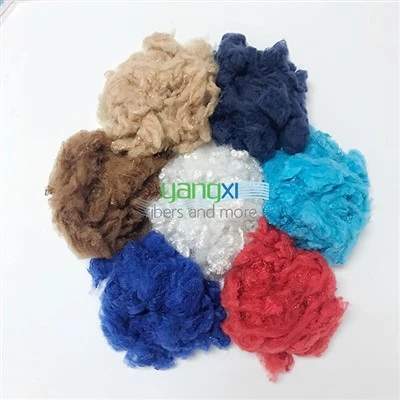
- Reinforcing Tensile Strength Against Curing Degradation: To prevent natural yarns from weakening during intense non-iron baking processes, blending base fibers with high-tenacity Recycled Polyester Staple Fiber provides excellent structural support. This sustainable polyester component offers high tensile strength, precise filament uniformity, and low thermal shrinkage, acting as a durable internal skeleton that prevents tearing along seams while maintaining clean shapes, helping brands hit environmental goals.
- Formulating Specialized Multi-Functional Fabrics: For technical uniform programs or premium corporate apparel lines that need a combination of properties-such as permanent flame retardancy, low-pilling faces, or anti-static behaviors alongside long-lasting non-iron performance-blending with targeted Special Environmental Fibers achieves optimal results. This material integration allows processing factories to avoid price competition, pass strict international quality audits, and secure long-term Supply Chain Resilience within competitive global retail markets.