The Polymer Physics of Garment Deformation and Structural Shape Retention
Aug 24, 2026
In everyday apparel wear, consumers frequently observe a major performance discrepancy: garments of identical sizing and cut can exhibit radically different long-term dimensional stability. Some garments lose structural integrity after just a few wear cycles-resulting in stretched collars, elongated hems, and sagging silhouettes-while others maintain a crisp, form-fitting shape through repeated laundering.
Rather than stemming purely from manufacturing defects, garment deformation is governed directly by fiber length morphology, wet-tenacity performance, yarn twist density, and elastomeric blending ratios.
1. Structural Causes of Garment Deformation: Short Fibers and Low Wet-Tenacity
Garments that easily sag, stretch out, or lose shape are typically constructed from short-staple fibers with weak inter-fiber friction and poor wet-state mechanical strength:
- Low Wet-Tenacity Polymer Matrices: Materials such as standard viscose, low-end modal, and short-staple combed cotton feature loose internal polymer alignments. While offering a soft hand-feel and high drape, these fibers experience significant drop in tensile strength when wet.
- Mechanical Distortions During Laundering: Water immersion causes short-staple fibers to swell and untwist within the yarn core. Everyday mechanical agitation, twisting, and body friction cause short fibers to slip past one another, resulting in permanent fabric elongation, stretched necklines, and structural sagging.
- Lack of Internal Elastic Recovery: Unblended short-staple cellulosics lack internal polymer memory. Once pulled beyond their elastic yield point during daily wear, the molecular chains cannot snap back, creating permanent fabric distortion.
2. Materials Engineered for High Dimensional Stability
Conversely, shape-retaining fabrics utilize continuous filaments or high-tenacity long-staple fibers that maintain tight interlocking networks under both dry and wet conditions:
Dimensional Stability Matrix: Deformable vs. Shape-Retaining Fabrics
| Fiber Architecture & Category | Wet-Tenacity & Tensile Strength | Mechanical Recovery Mechanism | Primary Garment Performance |
| Short-Staple Viscose / Standard Modal | Low wet-tenacity; loose inter-fiber bond. | Weak; prone to permanent fiber slippage. | Soft drape; highly prone to collar/hem stretching. |
| Unblended 100% Short-Staple Cotton | Moderate dry strength; zero elastic recovery. | Poor; deforms under continuous mechanical tension. | Natural skin feel; sags over repeated wash cycles. |
| Long-Staple Cotton / Lyocell (Tencel) | High dry/wet tenacity; tightly twisted structure. | Superior; resists elongation and fiber displacement. | Crisp silhouette; maintains structural integrity. |
| Filament Synthetic Polymers (PET / Nylon) | Exceptionally high dry and wet tensile strength. | High elastic memory; zero wet-state degradation. | Outstanding shape retention; anti-sagging. |
| Balanced Elastomeric Blends (2%-5% Spandex) | High dynamic tensile recovery profile. | Controlled elastomeric memory restores original shape. | Optimal body contouring; prevents bagginess. |
3. The Role of Elastomeric Ratios in Fabric Recovery
Incorporating elastomeric fibers into a yarn matrix plays a critical role in controlling fabric stretch and shape retention:
- Optimal Elastomeric Blending (2% to 5% Spandex): Adding a controlled percentage of high-quality elastane allows the fabric to stretch dynamically with body movements and return immediately to its original dimensions, preventing permanent distortion.
- Over-Incorporation and Degradation Risks: Excessively high spandex content (or low-grade elastomeric fiber) leads to rapid elastic fatigue over time. Under continuous tension and repeated washing, low-grade elastane snaps or loses recoil force, causing the fabric to harden, yellow, and lose recovery capacity.
4. Engineering Shape-Retaining Textiles with Advanced Synthetic Fibers
To produce commercially viable, low-maintenance apparel that resists sagging while meeting global sustainability benchmarks, textile mills utilize high-tenacity synthetic fiber options:
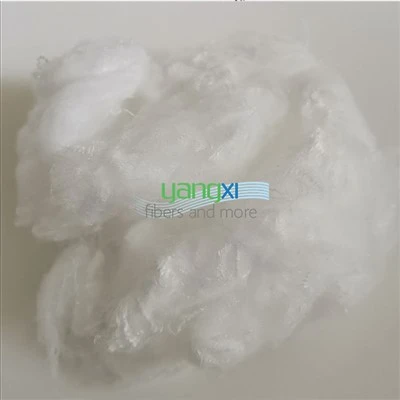
- High-Tenacity Recycled Base Fibers: To deliver high dimensional stability while supporting circular economy goals, yarn spinners blend natural cellulosics with GRS-certified Recycled Polyester Staple Fiber. Processing traceable recycled PET bottle flakes into continuous filament or staple forms provides strong tensile strength, minimizing post-wash fabric shrinkage and hem distortion.
- Specialized Structural Bonding Fibers: Incorporating specialized Special Environmental Fibers-such as low-temperature thermal bonding Low Melt fibers within woven or nonwoven cores-enables manufacturers to lock yarn intersections into place. Thermal binding prevents fiber slippage, enhances garment edge stability, elevates overall Material Performance, and strengthens Supply Chain Resilience.
Technical Summary for Apparel Sourcing Directors
Garment shape retention is determined by fiber length, wet-state tensile strength, and balanced elastomeric recovery rather than simple fabric weight. By pairing long-staple cellulosics or filament synthetics with controlled spandex ratios and high-tenacity recycled fibers, apparel brands ensure long-term dimensional stability across product lines.
Leveraging our integrated cross-border supply chain network across China, Thailand, and Vietnam, we support global trade partners in sourcing certified synthetic fiber inputs, optimizing yarn formulations, and executing resilient Global Sourcing Strategies.