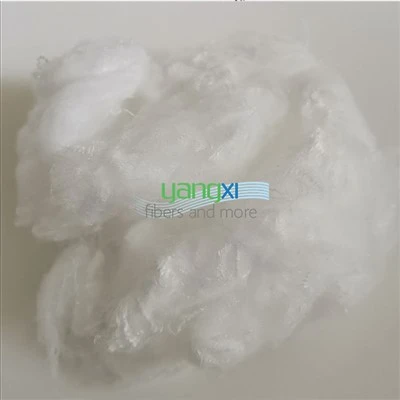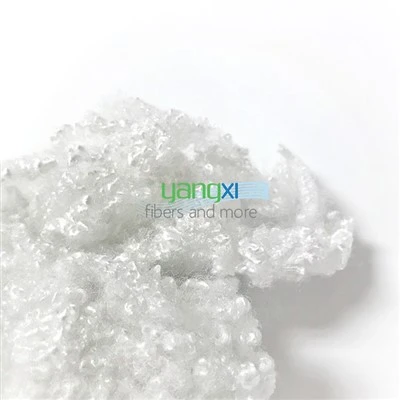

Analysis Of The Production Process Of Flame-retardant Polyester Staple Fiber
May 18, 2025
As an important functional textile raw material, flame-retardant polyester staple fiber is widely used in clothing, home furnishing, industry and other fields. Its production process combines chemical modification technology with traditional spinning technology to ensure that the fiber has flame retardant properties while maintaining good spinnability and durability. The following is a detailed introduction to its main production process.
Raw material preparation and modification
The production of flame-retardant polyester staple fiber begins with the pretreatment of polyester chips (PET). In order to give the fiber flame retardancy, flame retardants need to be added during the polymerization stage or before spinning. Common flame retardants include bromine-based, phosphorus-based or inorganic flame retardants, which are combined with polyester by blending or copolymerization. The modified polyester chips need to be dried to control the moisture content below 50ppm to ensure the stability of subsequent melt spinning.
Melt spinning
The dried modified polyester chips enter the screw extruder and melt into a uniform melt at high temperature (about 280-290℃). After the melt is precisely controlled by the metering pump, it enters the spinning assembly and is extruded through the spinneret to form a fine stream. The number of holes and diameter of the spinneret directly affect the fineness and uniformity of the fiber, and the single filament fineness is usually 1.5-5.0 denier.
Cooling and oiling
The extruded melt stream is quickly solidified into nascent fibers in the side-blowing or ring-blowing cooling device. The cooling air temperature is controlled at 15-25°C, and the wind speed is adjusted to ensure uniform fiber structure. Subsequently, the fiber is oiled by the oil tanker to reduce friction, improve bundling and subsequent processing performance.
Drawing and winding
The nascent fiber enters the drawing process through the guide wire disc, and multi-stage drawing (total drawing multiple 3-4 times) is usually used to improve the orientation and strength of the fiber. The drawn fiber is formed into a silk cake by the winder to prepare for the subsequent cutting process.
Cutting and packaging
The silk cake enters the cutting machine and is cut into short fibers of 38-102mm in length according to demand. The cut fibers are compressed into bales by a baler, and finally quality inspected and packaged to ensure that the products meet the flame retardant grade standards (such as EN 1103 or GB/T 17591).
The production process of flame-retardant polyester staple fibers requires strict control of temperature, draft ratio and flame retardant dispersion to ensure stable fiber performance. With the improvement of environmental protection requirements, the research and development of low-smoke and non-toxic flame retardant technology has become an industry trend, further promoting its application in the high-end market.