
Disperse Dye Prices Surge in August As Raw Material Intermediate Costs Strain Dye Houses
Aug 12, 2026
Despite the textile sector remaining in a traditional summer demand lull, disperse dye prices experienced a comprehensive upward adjustment on August 8. Following two rounds of price increases in July, the entire disperse dye product series recorded new price highs, with Disperse Black 300% spot quotes approaching 30,000 RMB per ton. This price surge has intensified cost pressures across the dyeing and finishing supply chain.
The primary catalyst behind this price adjustment is the rapid cost inflation of essential chemical intermediates, specifically key precursor chemicals required for synthetic dye production.
1. Upstream Intermediate Cost Spikes and Environmental Capacity Limits
The sustained increase in disperse dye pricing is driven primarily by supply constraints and escalating costs for core chemical intermediates:
- Reduction Object Intermediate Surge: The key intermediate for black, blue, and violet disperse dyes-2-amino-4-acetamidoanisole (commonly referred to as "reduction object")-surged from 25,000 RMB per ton in late 2025 to between 70,000 and 100,000 RMB per ton by March 2026. This nearly 300% increase stabilized at historic highs of 100,000 RMB per ton through mid-2026, substantially raising baseline production costs for dye manufacturers.
- Capacity Concentration: Total domestic compliant capacity for this key intermediate is restricted to 50,000–60,000 tons, highly concentrated among three primary producers: Zhejiang Longsheng, Runtu, and Ningxia Zhongsheng. With minimal capacity expansion potential, slight demand increases lead to immediate pricing pressure.
- H-Acid Supply Deficits: Similarly, H-Acid-the essential intermediate for reactive dyes-faces strict environmental compliance mandates regarding sulfonation and nitration processes. With compliant domestic capacity below 60,000 tons, the market experiences a persistent supply deficit exceeding 10%, creating compounding cost pressures across both disperse and reactive dye chains.
2. Midstream Squeeze: Dyeing Houses Face Off-Season Margin Compression
The doubled cost of synthetic dyes has placed midstream dyeing and printing facilities in a challenging operational position during the summer off-season:
Dyeing & Finishing Sector Operating Dynamics
| Supply Chain Node | Current Operating Status | Cost Impact & Market Power |
| Dye Intermediate Suppliers | High Concentration (50k–60k ton limit) | Strong pricing power; holding prices at historic highs. |
| Disperse Dye Manufacturers | Comprehensive August Price Hikes | Passing intermediate costs downstream; Disperse Black at ~30,000 RMB / ton. |
| Midstream Dye Houses | Low Utilization (~60% capacity rate) | Weak off-season bargaining power; absorbing costs to retain key clients. |
| Downstream Apparel & Trade | Small-Batch Sampling Stage | Resistant to dye-fee increases ahead of the autumn/winter peak season. |
Due to severe process homogenization across conventional dyeing facilities, buyers hold significant leverage during the off-season. Most small-to-medium dye houses are forced to absorb dye price increases internally, narrowing operating margins as they await the autumn/winter procurement cycle.
3. Peak Season Outlook: Downstream Cost Transmission Ahead
While low off-season demand has temporarily delayed full dye-fee increases across downstream garment and fabric manufacturers, this absorption model cannot persist indefinitely.
Industry analysts project that as the textile sector enters its traditional peak procurement window in September and October, accumulated upstream dye and intermediate cost pressures will transmit downstream. Widespread adjustments in dyeing processing fees are anticipated as autumn and winter garment orders are finalized, distributing cost adjustments across fabric producers, apparel brands, and end consumers.
4. Mitigating Dye Volatility Through Advanced Fiber and Non-Dyeing Technologies
To hedge against recurring dye intermediate price volatility and increasingly strict environmental compliance costs, forward-thinking textile manufacturers are adopting dope-dyed and engineered synthetic fiber solutions.
Incorporating advanced fiber technologies into yarn spinning matrices enhances Material Performance while reducing reliance on traditional wet-dyeing processes:
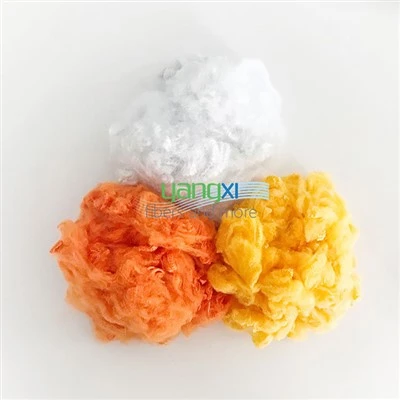
- Eco-Compliant Performance with Recycled Polymers: Replacing virgin polyester with GRS-certified Recycled Polyester Staple Fiber provides spinning mills with a stable, high-tenacity fiber foundation. Available in consistent color-pigmented solutions, recycled fibers eliminate secondary piece-dyeing steps, bypassing dye intermediate price swings while fulfilling international brand sustainability standards.
- Engineered Specialty Fiber Solutions: Utilizing thermal-bonding Low Melt fibers or permanent Flame Retardant polymers allows mills to produce high-value technical textiles, nonwovens, and protective fabrics. Integrating specialized Special Environmental Fibers provides functional differentiation, enabling textile manufacturers to build enduring Supply Chain Resilience against upstream raw material cost inflation.
Strategic Summary for Textile Procurement Directors
Managing disperse dye price inflation requires balancing short-term cost control with long-term material innovation. As the September–October peak procurement season approaches, transitioning from standard piece-dyed fabrics to advanced, solution-dyed, and functional fiber blends enables manufacturers to protect operating margins.
Leveraging our established international supply chain network across China, Thailand, and Vietnam, we support global partners in sourcing compliant, high-performance fiber inputs, optimizing processing efficiency, and executing resilient Global Sourcing Strategies.