
Geopolitical Conflicts Disrupt Energy Markets: Divergent Impacts Of Regional Shocks Shape The Modern Polyester Industry
Jun 03, 2026
Crude oil volatility remains the structural baseline governing the economics of the petrochemical chain. As the core cost foundation for upstream derivatives including PX, PTA, and ethylene glycol (MEG), fluctuations driven by geopolitical frictions continuously reshape supply-demand matrices and industry margin distributions. While the historic Russia-Ukraine conflict introduced gradual energy realignments with a moderate cost escalation, the intensifying U.S.-Iran conflict has triggered a severe supply shock. By restricting critical global maritime transit corridors, this contemporary geopolitical crisis has induced extreme volatility across the global polyester industry.
Comparative Intensities: Regional Energy Re-routing vs. Global Supply Shock
The structural differences between these two geopolitical milestones lie in their transmission velocity and supply-side impact. The earlier conflict primarily disrupted European oil and natural gas infrastructure. Because Asian manufacturing networks leaned heavily on Middle Eastern supply lines, the direct operational friction was well-contained, with price movements restricted within a manageable 3% boundary and downstream weaving mills benefiting from a prolonged 1-to-2 week adjustment window.
Conversely, the ongoing friction in the Middle East represents a direct supply shock. With the Strait of Hormuz facing severe navigation restrictions and ongoing active crossfire, global crude transits through this vital chokepoint-which carries 20% of global oil volumes-have plunged to just 35% of pre-conflict baselines. This structural blockage has introduced an immediate global deficit of 6 to 7 million barrels per day. International pricing reflected this tension, with WTI crude futures advancing 5.49% to settle at 92.16 USD per barrel, while Brent crude climbed 4.24% to 94.98 USD per barrel. This rapid price escalation instantly triggered limit-up movements for domestic PX and MEG contracts, generating an intense cost squeeze across midstream manufacturing installations.
Structural Market Fragmentation and the High-Cost Era
Over the medium term, the prolonged closure of critical maritime pathways is causing severe raw material deficits for manufacturers reliant on imported chemical intermediates. With import dependencies for materials like ethylene glycol exceeding 20%, domestic factory inventories are running at critical lows, forcing several large-scale polymer installations to reduce operational loads. This structural risk premium has effectively anchored Brent crude within a prolonged 95 USD to 115 USD per barrel range, signaling that the global synthetic sector has officially entered a persistent high-cost development epoch. Under these conditions, capital-constrained and non-integrated spinning installations are facing rapid market exclusion, accelerating industry consolidation toward highly capitalized, vertically integrated market leaders.
Strategic Material Optimization: Enhancing Supply Chain Resilience
To navigate this challenging macroeconomic environment where upstream raw material pricing remains highly decoupled from downstream consumer demand, advanced textile mills are proactively re-engineering their fiber matrix. Diversifying away from pure, volatile virgin petrochemical derivatives is a practical approach to stabilizing operational outlays.
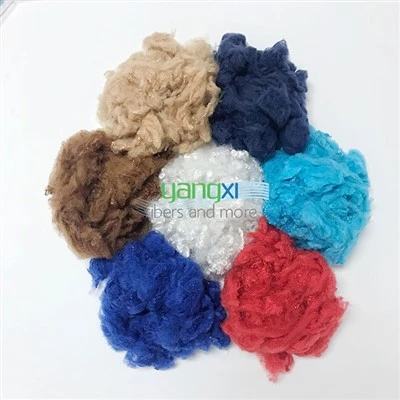
Deploying premium Recycled Polyester Staple Fiber offers a reliable alternative for export manufacturers, allowing them to anchor production costs within local circular supply loops and insulate their margins from international crude spikes. For global apparel brands looking to advance their ecological commitments despite volatile supply chains, integrating the advanced CiCLO® biodegradable series or bio-based PLA fiber groupings provides an effective mechanism aimed at strengthening environmental accountability while diversifying component dependency. Simultaneously, utilizing verified OEKO-TEX certified traceable fibers allows export-oriented weaving installations to validate chemical purity and structural sustainability directly to international retail compliance auditors.
For technical, commercial safety, and home textile applications where structural performance is paramount, blending standard polymers with specialized Flame Retardant fibers or utilizing high-precision Low Melt bonding matrices ensures superior physical specifications. Additionally, incorporating versatile Bosilun fibers into mixed spinning schedules improves tactile characteristics and optimizes processing yields under high-pressure manufacturing parameters. By incorporating these technical environmental fibers into standard procurement programs, textile enterprises can better support their underlying operating margins. This strategic diversification of raw material streams is designed to help progressive enterprises mitigate the systemic risks of geopolitical energy shocks, ultimately reinforcing long-term supply chain resilience and ensuring steady business growth in an evolving trade architecture.