
Industry Focus | RMB Appreciation Surges Over 3457 Basis Points! Is The 95.4 Billion Wool Market Primed For New Growth?
Dec 03, 2025
The RMB's strong appreciation to a one-year high, combined with stabilizing export structures, injects new momentum and cost-saving opportunities into the wool textile sector.
Since 2025, the synergy between the foreign exchange market and the wool textile industry has become increasingly evident. The Renminbi (RMB) has powerfully climbed against the US Dollar, with an annual appreciation exceeding 3400 basis points, hitting a high not seen in over a year. Although the overall import and export of wool raw materials and products show only minor fluctuation, significant structural adjustments are providing a dual positive signal for industry development.
RMB Strength Breaks Through, Hits One-Year Peak
On November 25, the foreign exchange market saw a critical breakthrough. Data authorized by the People's Bank of China showed the central parity rate for the RMB against the US Dollar was 7.0826, having appreciated by about 1000 basis points year-to-date.
In the trading market, the RMB performed even stronger. The onshore RMB against the USD rose to a high of 7.0851, the highest since mid-October 2024, accumulating an appreciation of over 2667 basis points from its lowest point this year. The offshore RMB broke the 7.09 barrier, hitting an intraday peak of 7.08305, refreshing its value to a peak of over a year, with an appreciation exceeding 3457 basis points. Notably, this occurred despite the US Dollar Index rising back above the 100 mark.
Industry analysts attribute the RMB's counter-cyclical strength to two core logics: first, the fundamental stability and capital flow advantages of the RMB relative to non-US currencies like the Euro and Japanese Yen; second, the central bank's continued release of appreciation signals, shifting the focus of exchange rate stability toward stabilizing a basket of currencies, which further reinforces market confidence.
Wool Trade Total $95.4 Billion, Structural Optimization Evident
Customs data shows that in the first 10 months of 2025, the total import and export value of China's wool raw materials and products reached $13.3 billion (approximately RMB 95.4 billion), marking a small year-on-year decline of 2.5 percent. The market operates steadily, with the results of demand structure adjustment becoming apparent.
Export Side: Raw Material Decline Narrows, Finished Goods Remain Resilient
The export of wool raw materials and primary processed products improved significantly, with the rate of decline narrowing substantially compared to the first half of the year:
- Wool Top: Export volume fell 1.8 percent, with the decline narrowing by 5.6 percentage points. Export value of 310 million saw its decline narrow by 8.4 percentage points.
- Dehaired Wool (Cashmere): Export volume fell 15 percent, with the decline narrowing by 11 percentage points. Export value of 200 million saw its decline narrow by 8.8 percentage points.

While the growth rate of intermediate and finished wool product exports slowed, core products maintained growth vitality:
- Wool Yarn: Export volume grew 10 percent, with an export value of 710 million (up 17 percent).
- Wool Sweaters: Export volume grew 13.7 percent, with an export value of 1.09 billion (up 8.8 percent).
- Only woven wool garments saw a slight decline in volume (down 0.7 percent) and value (down 7 percent).
Import Side: Total 248,000 Tons, Decline Continues to Narrow
Total imports of wool raw materials and primary processed wool reached 248,000 tons, down 9.4 percent year-on-year. Overall import decline continues to narrow, indicating a more rational import structure aligned with domestic market needs.
Dual Opportunity Stacked: A New Path for High-Value Materials
The stabilizing-to-strengthening RMB pattern is expected to continue, supported by domestic stimulus policies and diminishing upward pressure on the US Dollar. This presents two major opportunities for the textile sector:
- Reduced Import Costs: RMB appreciation directly lowers the cost of importing core raw materials like wool.
- Structural Upgrade: The continued optimization of import and export structure lays the foundation for the industry's transition towards high-added-value fields.
For textile manufacturers, this is the optimal window to strategically pivot. By utilizing the cost savings from the stronger RMB, companies can either lower production costs or, more strategically, invest in higher-value, specialized materials to drive the necessary product upgrade without drastic price increases.
Blending Strategy: Maximizing Cost Savings for High-Value Growth
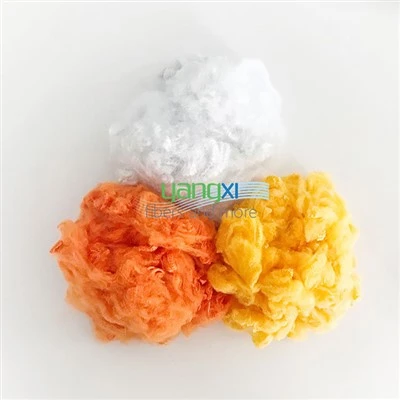
The industry's future lies in high-value, specialized products. As a major supplier of advanced synthetic fibers in Jiangyin, we recommend leveraging this currency advantage to maximize cost efficiency and performance. Our Polyester and Nylon Staple Fibers are highly cost-effective alternatives for blending, allowing manufacturers to create high-performance apparel while securing stable costs. By utilizing this strategic window, companies can invest in our GRS-certified Recycled Polyester (RPET) or functional fibers to meet global "Green" and "High-End" demands, securing competitiveness beyond mere price.
Looking to capture the cost-saving window and pivot your products toward high-value growth? Contact Jiangyin Yangxi International Trade today to explore our functional Polyester and Nylon blending solutions.
Tags: RMB Appreciation, Wool Textile Trade, Import Cost Reduction, Blending Strategy, High-Value Textiles, Polyester Fiber, RPET, Foreign Exchange