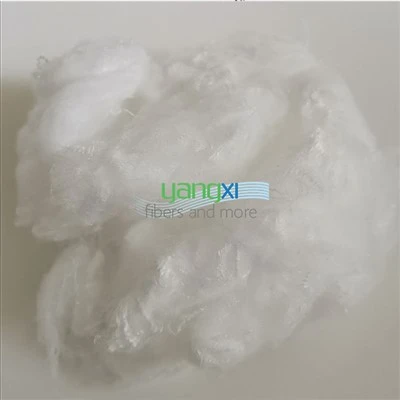
Low-melting-point Polyester Fiber: Innovative Design Concept Leads The New Trend Of Textiles
May 20, 2025
Today, as the textile industry pursues the integration of high efficiency, environmental protection and multifunctionality, low-melting-point polyester fiber is becoming an important force in promoting industrial upgrading with its unique design concept.This functional fiber based on polyester has achieved a significant reduction in melting temperature through molecular structure optimization and process innovation, opening up new possibilities for downstream applications.
Design core: balancing performance and sustainability
The original intention of the design of low-melting-point polyester fiber is to solve the limitations of traditional hot-melt adhesive materials. By introducing copolymerization modification technology, its melting point can be controlled between 80℃-130℃, which is significantly lower than conventional polyester fiber (about 250℃). This feature enables it to achieve strong bonding without high temperature and high pressure in non-woven fabrics, clothing linings and other fields, which not only reduces energy consumption, but also reduces damage to the strength of the fiber body. At the same time, the fact that its raw materials can be fully recycled is in line with the trend of circular economy in the global textile industry.
Functional integration: from single material to system solution
The design of modern low-melting-point polyester fiber has broken through the basic bonding function and developed in the direction of multifunctional composite. For example, by adding hydrophilic groups or antibacterial agents, the fiber can be given moisture absorption and perspiration or antibacterial properties; by adjusting the crystallinity, its adhesion compatibility with substrates such as cotton and polyester can be optimized. This "modular" design thinking enables the fiber to be flexibly customized according to downstream needs to meet multiple scenarios such as medical protection and home decoration.
Market Prospects: Technology Iteration Drives Industrial Changes
With the improvement of the intelligence level of textile equipment, the precise temperature control processing advantages of low-melting-point polyester fibers are further highlighted. Industry data show that the production efficiency of non-woven fabrics using this fiber can be increased by more than 30%, and the finished product is lighter and more breathable. In the future, as bio-based modification technology matures, its environmental protection properties will be more competitive, and it is expected to replace some traditional hot melt adhesive products and reshape the value distribution of the industrial chain.
The continuous evolution of this design concept not only reflects the progress of materials science, but also reflects the textile industry's unremitting pursuit of efficient, green and high value-added solutions.