

How to choose the right Down Like Fiber for Filling?
Sep 30, 2026
Hey there, if you’re scrolling for the right down-like fiber for filling, you’re probably knee-deep in picking stuff that’s comfy, lasts, and works for whatever you’re making—pillows, comforters, toys, maybe even outdoor gear that can’t handle real down. Let me tell you, I’ve been in this game as a down-like fiber supplier for years, and I see so many folks overcomplicating this, or grabbing whatever’s cheapest without thinking through their end use. Let’s break this down like we’re chatting over a coffee, no corporate jargon, just real talk that actually makes sense.
First off, let’s get one thing straight: down-like fiber isn’t just “fake down.” It’s a polyester staple fiber (PSF) engineered to mimic the fluff, bounce, and warmth of real duck or goose down—without the allergies, ethical headaches, or high cost. But not all of these fibers are created equal. The wrong pick will go flat in months, clump up, or feel scratchy instead of that soft, cloud-like vibe everyone wants. So what do you actually need to look at before ordering a whole batch?

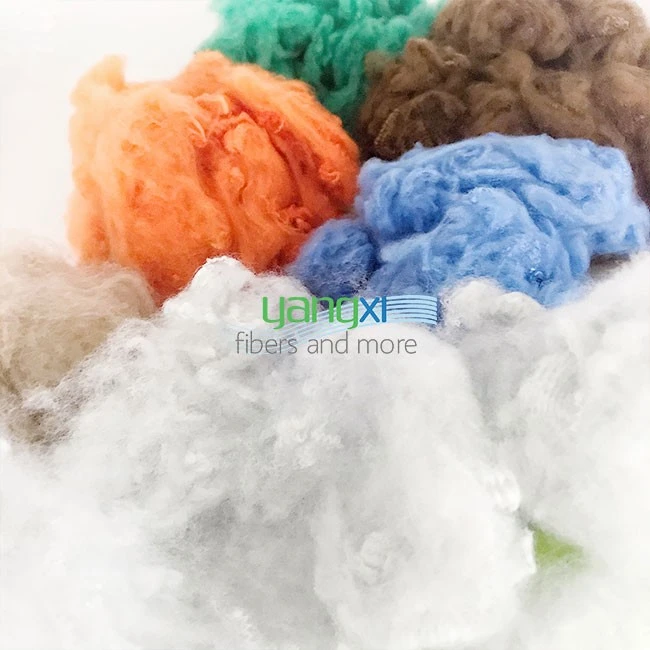
Let’s start with the big one: what are you filling, exactly? That’s the first question I ask every customer that reaches out to me. If you’re making pillows, you’re gonna have different needs than if you’re stuffing a kid’s stuffed animal or a winter comforter. For pillows, support and softness are key—you don’t want your head sinking all the way to the sheet in a week, but you also don’t want something that feels like a cardboard box. That’s where something like Polyester Filler for Pillows makes total sense. This stuff is designed to hold its shape just enough, stay fluffy night after night, and not go lumpy. I’ve seen customers use cheaper fibers here that pack down so fast they’re returning 50% of their order within a month—skip that, pick the filler made specifically for pillows, not just generic filling.
Next up, fiber size and shape, because that’s what makes it feel like down. Real down is made of tiny, crimped clusters, right? So your down-like fiber needs to mirror that to trap air (which is what keeps you warm or makes a pillow soft). Let’s talk denier, because that’s the measure of how thick each fiber is. A lot of new folks mix up denier—lower denier = thinner fiber, which feels more like real down’s fine filaments. Higher denier is thicker, more durable, but can feel stiffer. If you want that super soft, almost luxurious feel, Polyester Staple Fibre in 15d is a solid call. It’s thin enough to mimic down clusters, but still has enough structure to not fall apart. Now, if you need something that’s a little sturdier for heavier items? Maybe not, but let’s hold that thought for crimp.
Oh right, crimp—tiny, wavy bends in the fiber that are non-negotiable for fluff retention. Hollow conjugated fibers are the gold standard here, because they’re hollow (so they trap more air, better warmth per weight) and have a special crimp that locks the fiber in place instead of collapsing. I always point customers to 3D Hollow Conjugated Polyester Staple Fiber when they want that bounce back without being too thick. The 3D crimp is way more consistent than generic crimp, so when you fluff up a comforter or a pillow, it stays that way instead of packing flat. If you’re looking for something specifically tailored for bedding that needs to stand up to multiple washes? 15D Hollow Conjugated Polyester Fiber is another great pick—same hollow structure, but that 15 denier thinness makes it feel way more like real down than bulkier options.
Wait, let’s not forget about length either—fiber length is measured in millimeters, and that matters too. If you’re stuffing something that needs to hold its shape through tight seams (like a jacket or a toy) or lots of movement, you need longer fibers that don’t slip out or clump together. For example, 7D64mm HCS is perfect for that. The 64mm length is long enough that when you’re stitching a jacket liner or a stuffed animal’s limbs, the fibers stay in place, no stray bits poking out, and it doesn’t clump even after being squeezed or washed a bunch. I had a customer last year who was making outdoor sleeping bags for campers—they kept using short fibers that shifted around, and once they switched to this 7D64mm HCS, their product reviews went through the roof because the insulation stayed in the right spots.
Now, let’s talk about the stuff that’s easy to overlook: sustainability and practicality, because these days almost everyone cares about both. A lot of down-like fiber these days is made from recycled plastic bottles, which is a huge win. Not only does it cut down on waste, but recycled PSF is often just as good (if not better) than virgin fiber, because the manufacturing process has gotten way better. I only work with recycled options because that’s what my customers ask for now—they don’t wanna sell something that’s contributing to plastic waste, and their buyers (like me, honestly) feel better about choosing it. Also, washability: if you’re making something that needs to go in the washing machine (pillows, toys, comforters), make sure the fiber is engineered to hold up to repeated cycles without losing its fluff. Generic filling might clump after one wash, but the ones I mentioned—polyester filler for pillows, those hollow conjugated ones—are made to get tossed in the wash over and over and still bounce back.
Wait, let’s get real about common mistakes I see people make so you can avoid them. First, buying based on price alone. I get it, budgets are tight, but that $0.50 cheaper per kilo fiber will cost you way more in returns, bad reviews, and having to re-stuff everything. A customer once told me they tried a no-name fiber for their baby stuffed animals—within 3 months, the toys were flat, lumpy, and the fibers were coming out through the seams. They ended up having to replace 200 toys, which cost way more than if they’d picked the right filler in the first place. Second, not matching the fiber to the end use. I see people using toy stuffing in pillows, or pillow stuffing in sleeping bags—each has different requirements, and there’s a reason we have specific products for each. If you’re not sure which is which, just ask a supplier who knows their stuff (that’s me, by the way, I’m always happy to chat through it).
Another thing: allergies and performance. Real down is amazing, but 1 in 10 people are allergic to it, right? Down-like fiber is hypoallergenic, which is a huge selling point for pillows, comforters, and baby products. But not all down-like fibers are the same when it comes to that—some cheap ones have leftover oils or chemicals from manufacturing that can irritate skin. The recycled PSF I work with is processed to remove all that, so it’s safe for sensitive skin, no weird smells right out of the bag. That’s a big one for anyone selling to families or people with allergies—don’t skip checking that.
Let’s do a quick little cheat sheet for different projects to make it easier, since I know you might be zoning out on all the terms. If you’re:
- Making pillows: go with Polyester Filler for Pillows—soft, supportive, stays fluffy
- Making comforters or duvets: pick 15D Hollow Conjugated Polyester Fiber or 3D Hollow Conjugated Polyester Staple Fiber for that cloud-like warmth and bounce
- Making stuffed animals or jacket liners: 7D*64mm HCS is the way to go—stays in place, no clumps, holds up to squeezing
- Just want that ultra-soft, down-like feel without the bulk: Polyester Staple Fibre in 15d is perfect, works for almost any small to medium project
Wait, one more thing about testing—don’t buy a whole container before testing a small sample. I always give free samples to customers because what works for one person might not work for you. Grab a 100g sample of the fiber you’re thinking of, feel it, fluff it up, wash it once (if you can) and see how it holds. I had a customer last month who ordered a sample of the 3D hollow fiber, used it for a test comforter, and called me the next day saying it was way softer than the cheaper fiber they’d been using. Samples are free (from me, at least) so there’s no excuse not to test before you commit to a big order.
Now, let’s wrap this up with what really matters: choosing the right down-like fiber isn’t about picking the most expensive or the fanciest one—it’s about picking the one that fits your specific needs. Take 5 minutes to ask yourself: what am I filling? Does it need to be washable? Hypoallergenic? Last a long time? Fluffy like down? Then pick the fiber that checks those boxes, don’t cut corners, and test a sample if you’re unsure.
If you’re ready to stop guessing and find the right down-like fiber for your next project, I’m here to help. I’ve got all the options I mentioned above, plus others I didn’t get into, and I can walk you through which one will work best for whatever you’re making. No pushy sales talk, just honest advice from someone who’s been doing this for years and knows how frustrating it is to pick the wrong filling. Reach out anytime to chat through your needs, grab a sample, or place an order.
REFERENCES
- Textile Institute. (2022). "Properties of Polyester Staple Fibers for Filling Applications." Journal of Textile and Apparel Technology and Management, 12(3), 1-12.
- European Polyester Producers Committee. (2023). "Sustainability and Performance of Recycled Polyester Fibers for Bedding and Apparel." EPPC Technical Report.
- American Home Furnishings Alliance. (2021). "Guidelines for Filling Materials in Bedding and Upholstery Products." AHFA Safety and Performance Standards.
- International Fiber Science Society. (2022). "Crimp Characteristics of Conjugated Polyester Fibers and Their Impact on Fluff Retention." Journal of Fiber Science and Technology, 78(5), 156-164.