

What are the hygroscopicity properties of PLA fiber?
Jun 26, 2026
What are the hygroscopicity properties of PLA fiber?
As a PLA Fiber supplier, I am often asked about the various properties of PLA fiber, and one of the most frequently inquired aspects is its hygroscopicity. Hygroscopicity refers to the ability of a material to absorb and retain moisture from the surrounding environment. Understanding the hygroscopicity properties of PLA fiber is crucial for its applications in different industries, especially in textiles and packaging.
1. Basic Hygroscopicity of PLA Fiber
PLA (Polylactic Acid) fiber is a biodegradable and renewable synthetic fiber. Compared to natural fibers like cotton and wool, PLA fiber has relatively low hygroscopicity. Cotton, for example, can absorb up to 25 - 30% of its weight in moisture under high - humidity conditions, while PLA fiber typically has a moisture regain of around 0.4 - 0.6%. This low moisture regain is due to the chemical structure of PLA.
The molecular structure of PLA consists of repeating lactic acid units. The polymer chains are relatively hydrophobic, with few polar groups available to interact with water molecules. Water molecules are polar, and they tend to be attracted to materials with polar functional groups. Since PLA has a limited number of such groups, its ability to absorb water is restricted.
2. Factors Affecting the Hygroscopicity of PLA Fiber
Temperature and Humidity
The hygroscopicity of PLA fiber is significantly influenced by the temperature and humidity of the surrounding environment. As the relative humidity increases, the amount of moisture absorbed by the PLA fiber also increases. At low relative humidity (e.g., 20 - 30%), the moisture absorption of PLA fiber is minimal. However, when the relative humidity reaches 80 - 90%, the fiber will absorb more moisture, although still much less compared to natural fibers.
Temperature also plays a role. Higher temperatures generally reduce the moisture absorption capacity of PLA fiber. This is because at higher temperatures, the kinetic energy of water molecules increases, making it more difficult for them to be retained by the fiber.
Fiber Processing and Modification
The way PLA fiber is processed can affect its hygroscopicity. For example, fiber spinning methods can influence the surface area and porosity of the fiber. Fibers with a larger surface area and higher porosity have more contact points with water molecules, which may increase their moisture absorption.
Chemical modification is another way to change the hygroscopicity of PLA fiber. By introducing hydrophilic groups onto the surface of the fiber through chemical reactions, the fiber's ability to attract and retain water can be enhanced. For instance, grafting polymers with polar functional groups onto the PLA fiber surface can improve its hygroscopicity.
3. Implications of Hygroscopicity in Different Applications
Textile Industry
In the textile industry, the low hygroscopicity of PLA fiber has both advantages and disadvantages. On the one hand, it makes the fiber quick - drying. When used in sportswear or outdoor clothing, PLA fiber can wick away sweat rapidly, keeping the wearer dry and comfortable. This is especially beneficial in high - activity situations where moisture management is crucial.
On the other hand, the low moisture absorption can make the fabric feel less breathable compared to natural fibers. In hot and humid environments, the lack of moisture absorption may lead to a feeling of stickiness on the skin. To overcome this, PLA fiber is often blended with natural fibers such as cotton or wool. The natural fibers can provide the necessary moisture absorption, while the PLA fiber contributes its strength and quick - drying properties.
Packaging Industry
In the packaging industry, the low hygroscopicity of PLA fiber is an advantage. It helps to protect the packaged products from moisture damage. For example, when used in food packaging, PLA fiber can prevent the ingress of moisture, which can cause spoilage and degradation of the food. It also maintains the integrity of the packaging material itself, as excessive moisture absorption can lead to swelling and weakening of the fiber.
4. Comparison with Other Fibers
Comparison with Bosilun Tops
Bosilun Tops are another type of specialty fiber. Bosilun Tops may have different hygroscopicity properties depending on their composition. Generally, if Bosilun Tops are made from materials with more polar groups or a more porous structure, they may have higher hygroscopicity than PLA fiber. This difference in hygroscopicity can lead to different performance characteristics in applications. For example, in textile applications, Bosilun Tops may be more suitable for products that require high moisture absorption, while PLA fiber is better for quick - drying applications.
Comparison with Low Melt Polyester Fiber
Low Melt Polyester Fiber is also a synthetic fiber. Similar to PLA fiber, low melt polyester fiber has relatively low hygroscopicity. However, the chemical structure of low melt polyester fiber is different from that of PLA fiber. Low melt polyester fiber is made from polyester polymers, and its molecular chains also have limited polar groups. The difference in their chemical structures may result in slightly different moisture absorption behaviors under the same environmental conditions.
5. How to Optimize the Hygroscopicity of PLA Fiber for Specific Applications
If you need to increase the hygroscopicity of PLA fiber for a particular application, there are several methods. As mentioned earlier, chemical modification is an effective way. You can work with chemical engineers to develop appropriate modification processes. Another approach is to blend PLA fiber with other fibers that have high hygroscopicity. This can be a cost - effective and practical solution.
6. Conclusion and Call to Action
In conclusion, the hygroscopicity properties of PLA fiber are an important aspect that affects its performance in various applications. Its low moisture absorption makes it suitable for quick - drying and moisture - sensitive applications, but it may also have limitations in some cases. By understanding these properties and taking appropriate measures, we can optimize the use of PLA fiber.

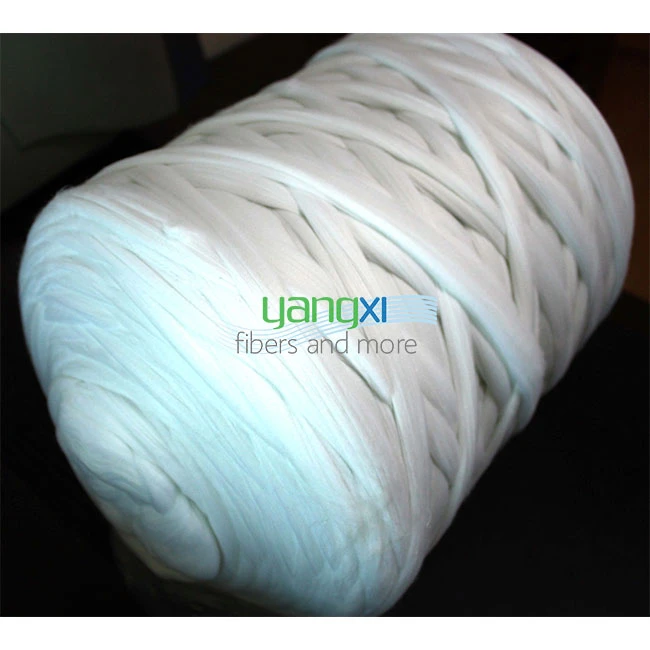
If you are interested in purchasing PLA Fiber for your specific needs, or if you have any questions about its hygroscopicity or other properties, please feel free to contact us. We are here to provide you with high - quality PLA fiber and professional technical support.
References
- Aranberri, J., & Eceiza, A. (2019). Biodegradable polymers for food packaging: A review. Polymers, 11(1), 107.
- Lim, L. T., Auras, R., & Rubino, M. (2008). Processing technologies for poly(lactic acid). Progress in Polymer Science, 33(8), 820 - 852.
- Oksman, K., Skrifvars, M., & Selin, J. F. (2003). Biocomposites based on PLA and flax fibers. Composites Science and Technology, 63(9), 1317 - 1324.