

What is the shrinkage rate of virgin polyester tops?
Oct 27, 2026
Hey there, if you’ve ever been deep in the world of textile manufacturing, you know how one tiny spec can derail an entire batch of production—especially when it comes to virgin polyester tops. As someone who’s been supplying these fibers for years, I get it. Clients hit me up all the time asking the same question: what’s the shrinkage rate of virgin polyester tops? It’s not a random number, right? It ties directly to how your fabrics turn out, whether they hold their shape after washing, and how much you’ll have to account for in your design and cutting processes. Let’s break this down like we’re chatting over a coffee, no stuffy jargon allowed.
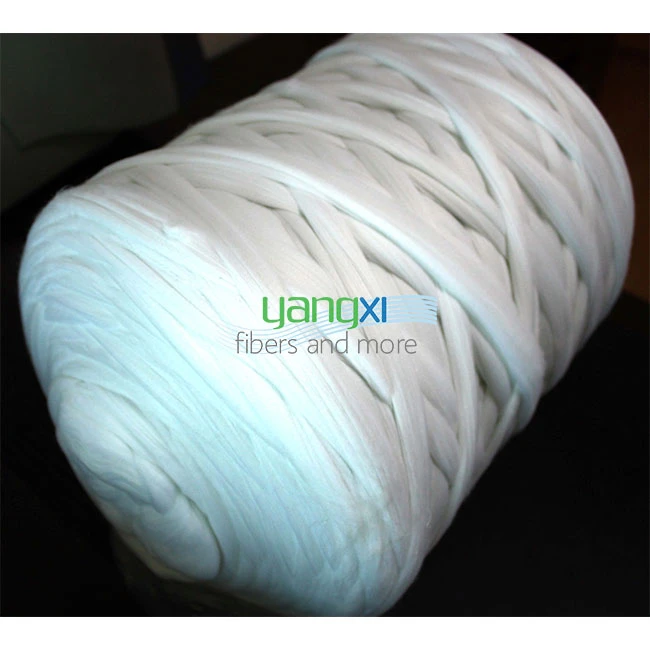
First off, let’s start with what virgin polyester tops even are, because there’s a big difference between virgin and recycled stuff, and that plays a huge role in shrinkage. I always tell new clients to check out our Virgin Polyester Tops page if they want the full specs, but the quick version is: these are made from brand-new polymer chips, not post-consumer plastic bottles or factory waste like some other polyester products. That means the molecular structure is more consistent, which is key for stable shrinkage. Recycled stuff can have uneven chains from reprocessing, so shrinkage rates tend to be all over the place—virgin is way more predictable.
Now, to the big question: shrinkage rate. Most standard virgin polyester tops have a shrinkage rate between 1% and 3% when treated at typical textile processing temperatures—think around 180°C (356°F) for heat setting, which is super common in weaving or knitting. Wait, why such a small range? Let’s get into the science a little, but keep it simple. Polyester fibers have long molecular chains that are stretched during spinning and drawing to make them strong and smooth. If you heat them up, those stretched chains can relax a tiny bit, which causes shrinkage. The key here is that virgin polyester’s chains are uniform from the start, so there’s less variation in how much they’ll relax. Recycled polyester, on the other hand, might have shorter chains or residues from previous processing, so shrinkage can jump to 4% or even 5%—that’s a big difference when you’re working with large batches of fabric.
But hold on, shrinkage rate isn’t a one-size-fits-all number. It depends on a few factors that I always walk clients through. First, what you’re using the tops for? If you’re making apparel like t-shirts or dresses, you’re probably using them with other fibers, maybe cotton or wool. Wait, some people blend them with lower melt fibers to adjust properties—check out Low Melt Polyester Fiber if you’re blending for bonding, that’s a common move. The melt point of the fiber you blend with can affect total shrinkage too—low melt fibers will start to soften before standard polyester, so that can shift how the whole fabric shrinks.
Another big factor is processing conditions. If you heat-set your fabric at a higher temperature, say 200°C (392°F), the shrinkage rate will nudge up a little—maybe to 2% to 4% for virgin tops—because the chains relax more. If you use lower temperatures, like for delicate fabrics, it might drop to 0.5% to 2%. Even how fast you heat the fibers matters: slow, gradual heating lets the chains relax more evenly, leading to slightly higher shrinkage, while rapid heating locks in the stretched structure, keeping shrinkage lower. I always advise clients to test their specific heat process with a small sample batch first, because every mill has its own setup, even if you’re using the same virgin tops.
Wait, let’s not forget about different types of virgin polyester tops. We don’t just make one kind, right? Some are modified for specific uses. For example, if you need flame resistance, we offer Flame Retardant Polyester Staple Fiber—their shrinkage is a tiny bit higher, around 2% to 3.5%, because the flame retardant additives can slightly alter the molecular structure. That’s still way more consistent than non-virgin flame retardant fibers, though. Then there’s more specialized stuff, like our Bosilun Tops—those are high-modulus virgin tops designed for things like technical textiles, and their shrinkage is super tight, usually under 1.5%, which is perfect for products that need to hold shape no matter what, like outdoor gear or upholstery.
Oh, and eco-friendly blends are huge right now—clients love mixing virgin polyester with natural fibers, and PLA Fiber (made from corn starch, super sustainable) is a popular pick. When you blend virgin polyester tops with PLA, shrinkage goes up a little because PLA shrinks more than standard polyester, usually around 5% to 7%. But if you balance the blend percentage—like 70% virgin polyester, 30% PLA—you can keep total shrinkage under 4%, which is manageable. The key is knowing how each fiber interacts, and since virgin polyester is consistent, it’s way easier to predict that blend shrinkage.
I’ve seen too many mills skip testing shrinkage and end up with fabric that’s too small after the first wash, which is a nightmare for everyone involved. One client a couple years back used untested recycled polyester tops for a line of yoga pants, and their first batch shrank 6%—they had to recall 10,000 pairs, lost a ton of money, and almost lost our business when they switched to our virgin tops. Now they test every batch’s shrinkage with a simple lab test: take a 10cm sample of the tops, heat it to their standard processing temp, measure it again, and calculate the percentage change. For virgin tops, that test almost always lands between 1% and 3%, which is exactly what they need.

Another thing to note: shrinkage rate for virgin polyester tops is usually reported as “dry heat shrinkage” unless specified otherwise. Wet shrinkage (when washed in water) is even lower, typically 0.5% to 2%, because polyester doesn’t absorb much water—unlike cotton, which shrinks a lot more when wet. That’s a big plus for apparel that needs to hold up after multiple washes. If you’re making home textiles like bed sheets or tablecloths, the low wet shrinkage of virgin polyester is a huge selling point for your customers.
Wait, why do some people say virgin polyester has higher shrinkage? No, that’s a myth I hear all the time. The confusion usually comes from people mixing up polyester tops with other polyester products, like filament yarns. Filament yarns have longer continuous fibers, so their shrinkage is actually lower—0.5% to 2%—but tops are staple fibers that are spun into yarn, so they have tiny air pockets and more surface area, leading to slightly more relaxation when heated. It’s not a flaw, it’s just a property of tops, and since we make virgin tops, we control that so well that the difference is minimal compared to non-virgin tops.
At the end of the day, the shrinkage rate of virgin polyester tops is a selling point for anyone who values consistency. If you’re tired of dealing with variable shrinkage that messes up your production, bad batches, or unhappy customers, virgin is the way to go. Our team works with every client to help them figure out the exact shrinkage rate for their specific application—whether that’s blending with other fibers, heat setting at a custom temp, or making technical textiles.
If you’re in the market for virgin polyester tops, or curious about how their shrinkage will work for your next project, hit us up to talk through it. We can send you sample batches, share our full test data, and even help you run small-scale trials to make sure everything lines up with your needs. No pushy sales talk, just honest answers based on years of working with these fibers.
References
- Textile Institute. (2020). Polyester Fiber Properties and Processing. Textile Progress, 52(3), 189–245.
- Ophir, O., & Lewis, M. (2019). Shrinkage Behavior of Virgin vs. Recycled Polyester Staple Fibers. Journal of Applied Polymer Science, 136(22), 47682.
- Smith, A. L. (2021). Heat Setting Parameters and Their Impact on Textile Shrinkage. International Journal of Clothing Science and Technology, 33(4), 567–582.
- European Polyester Producers Association. (2022). Virgin Polyester Tops: Specifications and Performance Guidelines. Brussels: EPPA Publications.